The New Car Code at 50
The Motor Ombudsman looks at the evolution and impact of the New Car Code over the last 50 years (1976 to 2026), and the important role it continues to play in the automotive sector.
Driving high standards for half a century in the motor industry

1970s: Back to where it all began…
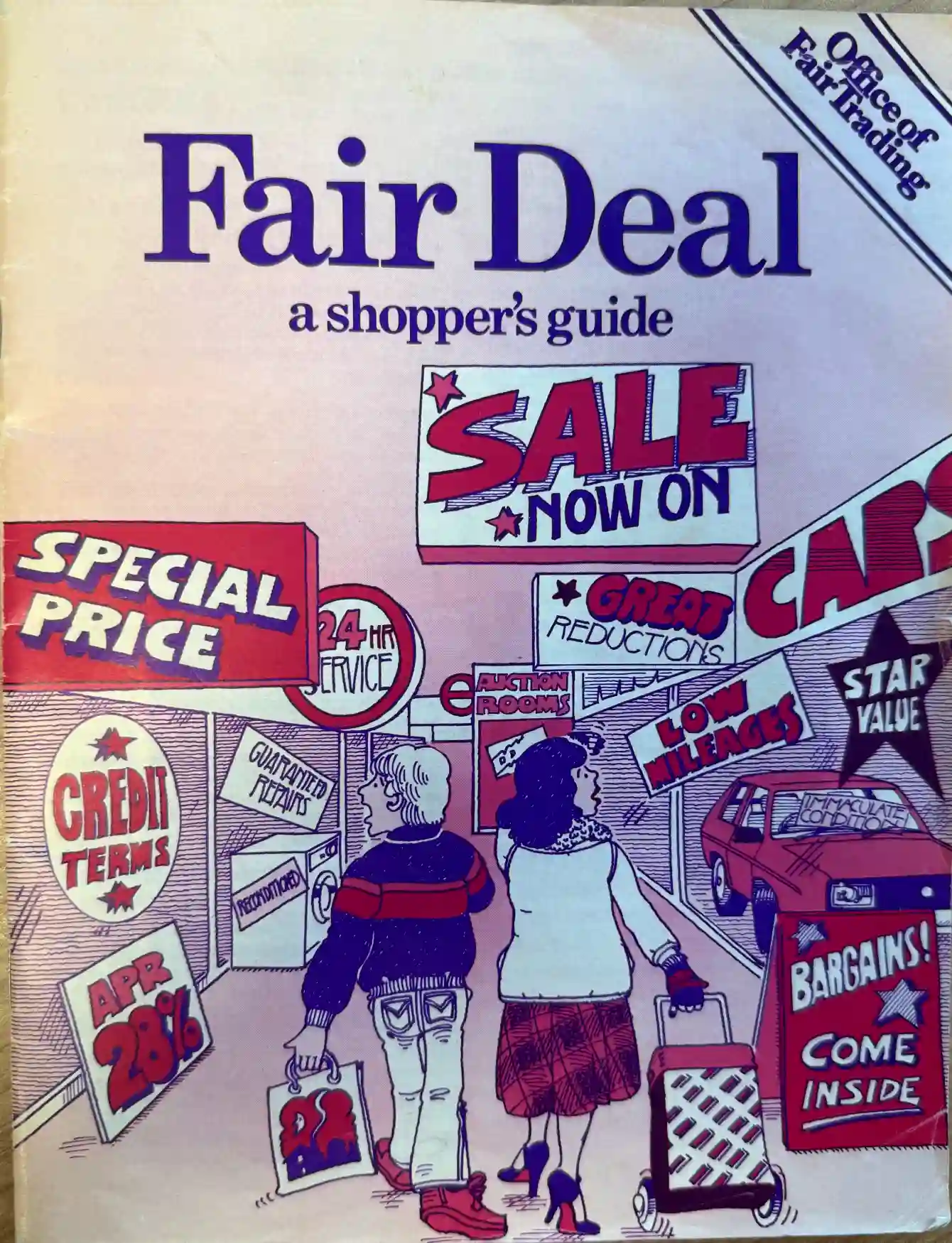
The Office of Fair Trading (OFT) was established by the Fair Trading Act 1973 as a government regulator to protect the public from being treated unfairly by traders, to prevent anti-competitive behaviour, and enforce consumer protection laws. As part of their remit, they actively worked on Codes of Practice for the motor industry to address consumer complaints, focusing specifically on used car sales
(Photo: The W. Livingstone Ltd car dealership in Glasgow, Scotland in 1979)
Buying a used car in the 1970s often involved drivers scouring adverts in their local newspaper, visiting local dealerships, or buying privately from another individual – a time when Tupperware parties and door-to-door salesmen were a common sight.
Even though it was likely that the level of awareness amongst consumers when it came to their rights was lower than in the modern-day era (due to the absence of the Internet, for example), buyers were, however, protected by some key legislation. This included the Trade Descriptions Act 1968 – enforced by local Trading Standards departments. The law made it a criminal offence to describe products falsely, such as a car, whilst it also addressed issues such as “clocking”, as odometers were largely analogue (mechanical), and were susceptible to being altered.
The Sale of Goods Act 1893 (later becoming the Sale of Goods Act 1979) was also a civil law applied in the sphere of the motor retail sector, to ensure cars were of “merchantable quality” and fit for purpose – now integral conditions echoed in the Consumer Rights Act 2015. Similarly, the Consumer Credit Act 1974 was designed to provide greater protection for consumers who borrowed money to buy a car, which would have typically been via a Hire Purchase (HP) agreement carrying a rate of interest.
1976: An industry first for New car buyers: A Code of Practice
Addressing shortfalls when consumers bought a used car was an important step taken by the OFT, but there were also complaints from those who purchased a brand-new car – a significant purchase for many.
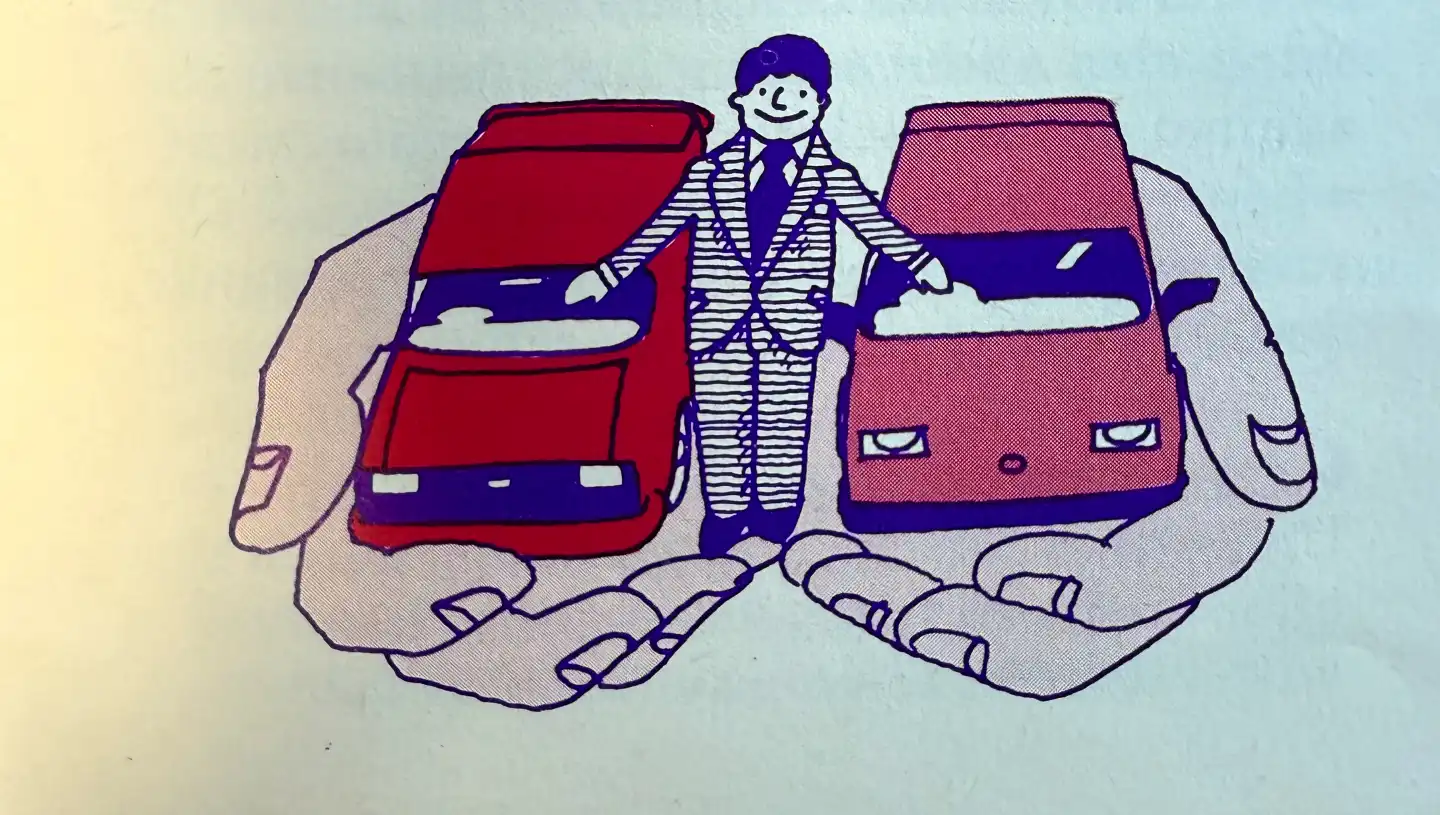
With the support of the OFT, three motor industry bodies joined forces to launch the ‘Motor Industry Code of Practice’ for new cars in 1976, bringing for the first time, a single set of guidelines for car manufacturers to adhere to in a voluntary capacity in relation to their advertising to consumers, the administering of warranties, and some aspects of vehicle servicing and maintenance.
The three organisations were:
- The Society of Motor Manufacturers and Traders (SMMT) – founded in 1902 by a British engineer to create a UK representative body to provide leadership, protection and direction to the British motor industry.
- The Scottish Motor Trade Association (SMTA) – setup in 1903 to encourage, promote and protect the interest of members of the motor trade; and
- The Motor Agents Association (MAA) – established in 1922 to protect the interests of automotive retail businesses. It is better known today as the Retail Motor Industry Federation (RMI).
2001: The dawn of a New era…The Consumer Code Approval Scheme
Over the years that followed, the Code of Practice evolved and was revised to enhance its effectiveness in the new car sector. The OFT remained a crucial oversight body to ensure that it continued to deliver its core purpose. In fact, in 2001, the OFT took another important step to further enhance industry standards and reduce consumer detriment by establishing the Consumer Code Approval Scheme (CCAS).
SMMT members decided to form their own New Car Code in 2002. Evolving from the ‘Motor Industry Code of Practice’, it was developed in collaboration with the OFT and CCAS over the next couple of years. It was designed to set out the standards and best practice guidelines for carmakers operating in the UK when it came to the supply of new models and the coverage provided by their warranties to customers, as well as the availability of replacement parts for repairs, and complaints handling.
Being a part of CCAS called for Code Sponsors i.e. those organisations administering Codes of Practice in their respective sectors, such as the SMMT, to apply and enter into a two-stage approval process for formal approval by the OFT, with the New Car Code being one of the Codes invited to take part in this journey. Stage One approval required proof of meeting OFT’s core criteria for gaining such a status. Stage Two was focused on being able to demonstrate that Code Sponsors and businesses signed up to the Code could maintain the highest standards demanded by this accreditation.
With evidence of satisfying the OFT requirements in both of these crucial phases, the SMMT New Car Code received full Stage Two approval in September 2004, and took the honour of becoming the first Code of Practice within any industry sector to be awarded this prestigious status. This underlined the importance of the Code and that it was deemed to be effective in promoting and safeguarding the interests of motorists, and provided added protection to consumers when buying a new car.
2009: Motor Codes: A New home for the New Car Code
With the formation of the SMMT New Car Code came the SMMT’s Regulation and Compliance Unit (RCU), and the Consumer Codes Advice and Conciliation Service – designed to help resolve complaints between consumers and businesses in a neutral environment (this was before the ADR Regulations arrived in 2015). It also paved the way for the introduction of a second Code of Practice in May 2008, namely the Service and Repair Code, to raise standards in the vehicle maintenance and repair sector – another source of notable consumer detriment, where research indicated that poor service was costing UK motorists an estimated £4 billion every year.
With consumers incurring notable losses when it came to buying and owning a vehicle, government’s call to improve standards in the motor industry was clear. There was a choice to make for the automotive sector – either to develop a mechanism to self-regulate, or government would bring in their own regulatory powers to address the reported shortfalls in standards.
The answer lay with the SMMT’s Regulation and Compliance Unit (RCU), which already had two comprehensive Codes of Practice under its belt, namely the New Car Code and Service and Repair Code – essential to effective self-regulation, and which were being adhered to by businesses, highlighting their appeal and effectiveness in driving improvements in the level of quality and service offered to consumers. In fact, by 2008, the New Car Code covered the majority of new cars sold across the UK, whilst the Service and Repair Code was being followed by around 5,000 subscribing garages.
To bring these Codes of Practice to consumers and businesses in the motor industry under a more prominent and recognisable banner, and be at the forefront of this self-regulatory regime, the SMMT’s Regulation and Compliance Unit was re-launched on 1st January 2009 as Motor Codes – a standalone independent subsidiary of the SMMT, taking on the responsibility of:
- Managing existing Motor Industry Codes of Practice and developing new ones to cover other areas of the car buying and ownership journey;
- Staffing a free consumer information line;
- Providing impartial conciliation and arbitration as part of its motoring dispute resolution service for consumers and businesses; and
- Growing the coverage of reputable traders sporting the all-important Motor Codes ‘tick of reassurance’.
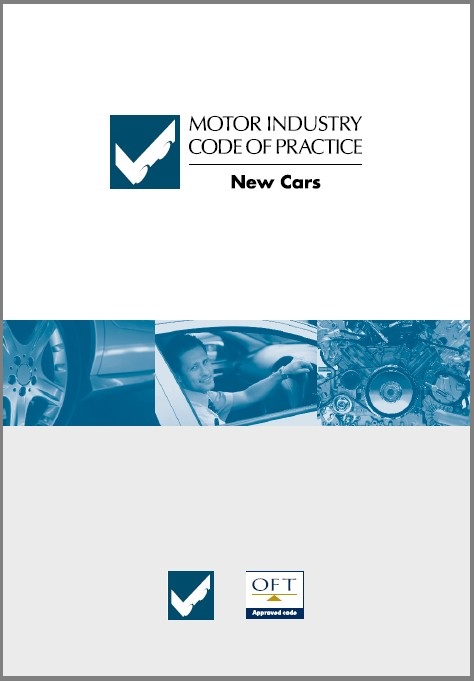
(Photo: The Motor Codes Motor Industry Code of Practice for New Cars in 2009)
2013: A New kind of endorsement: The Chartered Trading Standards Institute
The Chartered Trading Standards Institute (CTSI) assumed the responsibility of managing the Consumer Code Approval Scheme (CCAS) in April 2013, following a government “consumer landscape review”, which saw the OFT close its doors in 2014 after nearly four decades of protecting consumer interests.
This saw the New Car Code, and now two others, namely the Service and Repair Code, and the Vehicle Warranty Products Code – launched in 2009 and centered around extended vehicle warranties provided by manufacturers and third-party providers, subject to stringent audits for both Motor Codes and its subscribing businesses to continue promoting the CCAS badge as a sign that it continued to deliver and be fit for purpose.
2016: The Motor Ombudsman takes New ownership of the Codes
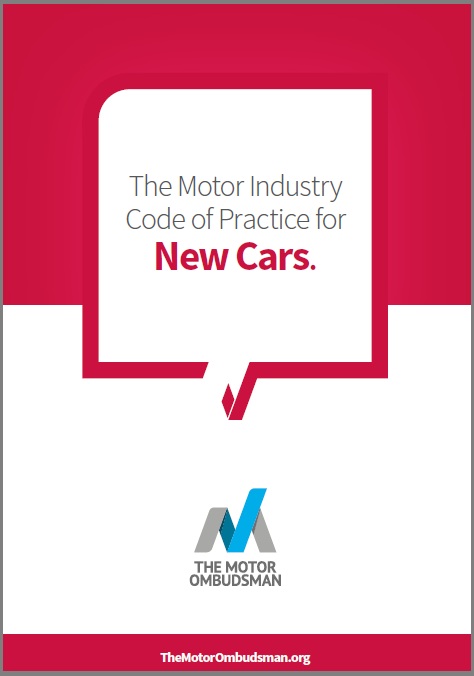
2016 was a pivotal year, as it saw the introduction of two ‘industry firsts’. These were namely, the launch of the first and most comprehensive Motor Industry Code of Practice for both new and used cars (otherwise known as the ‘Vehicle Sales Code’) in September, and the unveiling of The Motor Ombudsman in November of that year – the very first Ombudsman for the motor industry, and evolving from Motor Codes which ceased to exist in name.
By this time, the new Consumer Rights Act 2015 and Alternative Dispute Resolution (ADR) Regulations had come into force. More than 7,500 businesses were taking advantage of the many benefits of subscribing to one or more of The Motor Ombudsman’s Codes of Practice, which covered the entire customer vehicle purchase and ownership experience. At this point, the New Car Code was being adhered to by 40 accredited vehicle manufacturers – highlighting the widespread drive by businesses to ‘do the right thing’ under the self-regulatory regime.
The main implications of the arrival of The Motor Ombudsman were that it was ‘passed the batton’ as a ‘Code Sponsor’ from Motor Codes, and brought the whole Alternative Dispute Resolution service in-house for the first time (arbitration under Motor Codes was outsourced to a third party). In line with Ombudsman Association guidelines, it was also now completely free for consumers when looking to conclude disputes with businesses accredited to a Code of Practice. In addition, the suite of Codes was also revised and refreshed to sport the new Motor Ombudsman identity and reflect the existing car buying environment.
2024: A New identity for the Consumer Codes Approval Scheme
Fast forward another eight years, and The Motor Ombudsman is now one of 18 Code Sponsors, across eight key sectors (a total of seven beyond the motor industry), whilst The Motor Ombudsman is also offering the most comprehensive suite of Codes for the automotive sector.
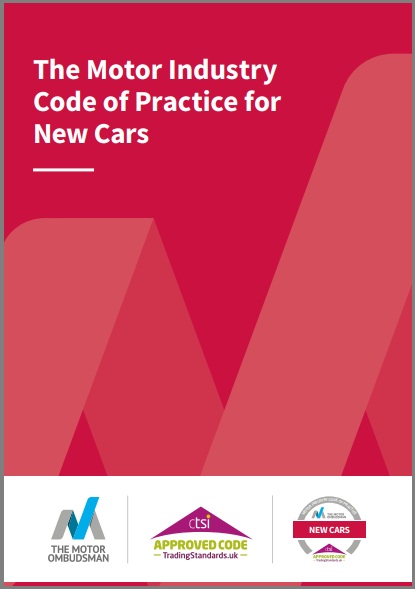
In another change for the identity of the Codes, the Consumer Codes Approval Scheme (CCAS) was renamed to the Approved Code Scheme (ACS) by the Chartered Trading Standards Institute (CTSI), reinforcing the Scheme’s identity and the influence of the Approved Code Logo over the previous decade. This called for a slight refresh of the New Car Code’s visual identity, and that of the other three Codes – an insignia which is still used to the present day.

2025: A New evolution of the New Car Code
This was another significant year for the New Car Code, thanks to two notable developments. The first was that, alongside the other Codes, the New Car Code was updated and refreshed in line with the evolution of the automotive sector, technological advancements, and consumer buying behaviour.
The Code now contains nearly 100 individual guidelines for businesses covering everything from advertising to in-house complaints processes, saw additional clauses incorporated in relation to subjects, such as, Advanced Driver Assistance Systems (ADAS) and self-driving features, the delivery of roadside assistance and service plans, and specific sections on paint, perforation and manufacturer base warranties, as well as the sale of alloy wheel and Guaranteed Asset Protection (GAP) insurance, for example.
The second stand-out moment for the New Car Code in 2025, was that, in September, nearly 50 years after the Code’s inception in 1976, the New Car Code’s portfolio was comprised of 50 accredited vehicle manufacturers for the first time, driven in part by the arrival of new market entrants from China – vehicle manufacturers that were choosing to be aligned with this badge of consumer reassurance and high standards as they began their retail journey in the UK.
2026: A major New milestone – 50 at 50
And to 2026….A time of celebration to mark half a century since the New Car Code began its journey back in 1976. The coming months are set to be another exciting period for the Code, which now sees 50 brands accredited covering around 98% of new car sales – a number set to grow as the new car market expands with other marques looking to enter a competitive automotive retail sector, and capitalise on the growth of electric vehicles as a powertrain of choice.
To view the New Car Code and the vehicle manufacturers accredited to the Code of Practice, click here.