

Tyre pressure affects how a car runs, brakes and uses fuel, but the recommended level by the vehicle manufacturer is not the same for every car. It depends on the model, tyre size and load, for example, which is why two cars from the same brand may need different pressures.
At The Motor Ombudsman, we provide information to help consumers when it comes to good practice around vehicle maintenance and motoring checks, including tyre condition and pressure, and when a Motor Ombudsman-accredited garage or tyre fitter may need to take a closer look.
What tyre pressure should my car have?
The most reliable places to find the recommended tyre pressures, are the vehicle handbook / manual, the label inside the driver’s door frame, or the inside of the fuel filler flap (i.e. for a petrol, diesel or hybrid car). Some vehicles show different figures for the front and rear tyres, and many also give separate pressures for normal driving and heavier loads, for instance, if there is luggage or more people in the car.
As a general guide, the recommended tyre pressure for many passenger cars sits between 30 and 36 PSI, or around 2.1 to 2.5 bar. Larger vehicles, fully loaded cars and some electric vehicles may need higher pressures, so the vehicle manufacturer’s recommended figure should always be followed.
These figures are useful for context, but they should only be treated as a starting point. The correct tyre pressure depends on the exact vehicle, tyre size and load, rather than the make of the car alone.
If your handbook lists tyre pressure in bar rather than PSI, you can also use our bar to PSI converter tool below to help find the correct pressure for your vehicle:
Bar to PSI Converter
For an approximate result, multiply the pressure value by 14.504
Tyre pressure explained: PSI and bar
Tyre pressure may be measured in PSI, bar, or both. PSI stands for ‘pounds per square inch’, and is a metric commonly used in the UK. Bar is another unit of pressure, and it often appears on tyre pressure labels, gauges and air machines.
This can cause some confusion if the vehicle handbook gives one unit and the pump uses another. The figures are measuring the same thing (like centimetres and inches), but they need to be converted correctly before inflating tyres.
One bar is equal to about 14.5 PSI, so a small change in bar can make a noticeable difference when converted into PSI.
Common bar to PSI conversions
Bar PSI
2.0 bar 29 PSI
2.1 bar 30 PSI
2.2 bar 32 PSI
2.3 bar 33 PSI
2.4 bar 35 PSI
2.5 bar 36 PSI
2.6 bar 38 PSI
2.7 bar 39 PSI
2.8 bar 41 PSI
3.0 bar 44 PSI
Bar to PSI conversion
To convert bar to PSI, multiply the bar figure by 14.5. To convert PSI to bar, divide the PSI figure by 14.5.
For example, 2.4 bar is around 35 PSI, while 32 PSI is around 2.2 bar. Because tyre pressure can be displayed in PSI, bar, or kPa, depending on the vehicle and air pump, drivers will sometimes need to convert between units. Is this a common issue?
How to check tyre pressure correctly
Tyre pressure should usually be checked when tyres are cold, before the car has been driven far. Driving warms the tyres, and can increase the pressure reading, which may make the result less accurate.
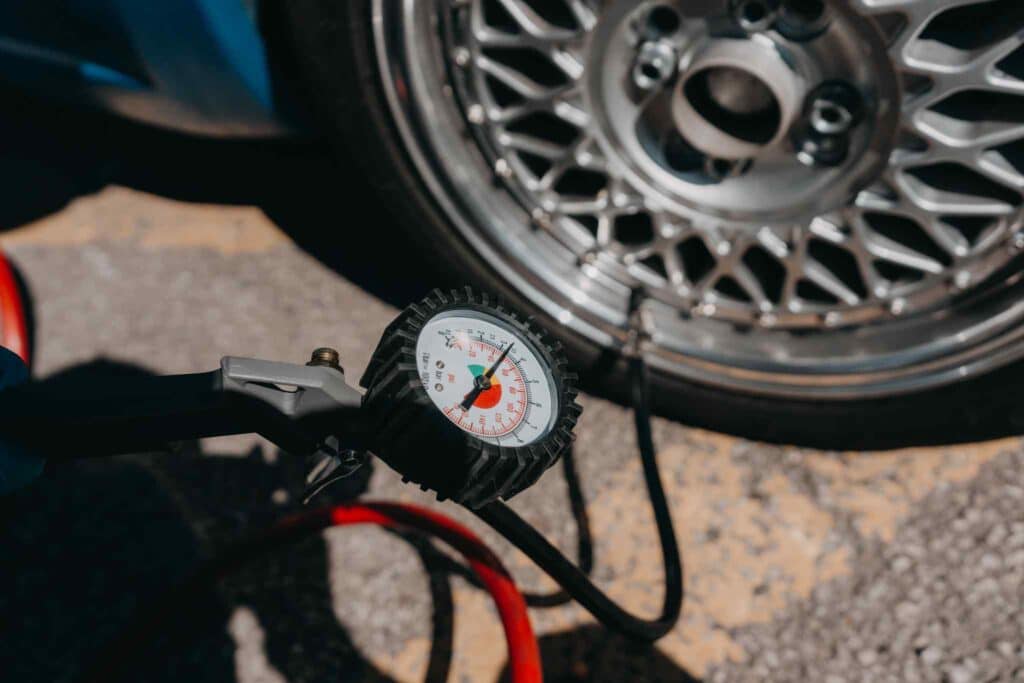
Start by checking the recommended pressure for the vehicle. Remove the valve cap, press the gauge firmly onto the valve, and compare the reading with the manufacturer’s figure. If the pressure is too low, add air in small amounts and check again. If it is too high, release a little air and re-check.
Remember to check all four tyres, as well as the spare wheel if the car has one. Vehicles will either carry a temporary spare wheel (less common now on newer vehicles) or a repair kit instead, so the handbook should be able to confirm what applies to the vehicle.
When and how often to check tyre pressure
Tyre pressure can change over time, even when there is no visible damage. It is sensible to check pressures regularly, before long journeys and when carrying extra passengers or luggage. A check is also useful if the car feels different on the road, the steering appears heavier than usual, or a tyre looks flatter than the others.
Cars fitted with a Tyre Pressure Monitoring System (TPMS) may alert the driver if pressure drops, but the system should not replace manual checks. A warning light can also appear after a puncture, a pressure change, a sensor issue, or after tyres have been inflated without the system being reset correctly.
What happens if tyre pressure is too high or too low?
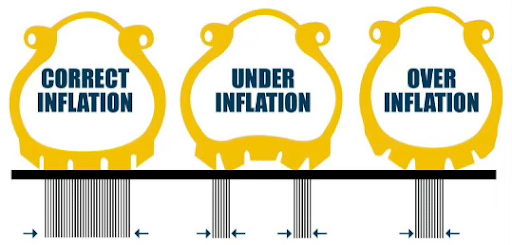
(Image courtesy of TyreSafe)
Under-inflated tyres can increase rolling resistance, which may affect fuel consumption, tyre wear and handling. They can also build up more heat while driving, especially on longer journeys or when the vehicle is heavily loaded.
Over-inflated tyres can reduce the contact area between the tyre and the road. This may affect ride comfort, braking performance and wear across the centre of the tread.
Uneven wear, repeated loss of pressure, visible cracking, bulges, cuts or vibration while driving should be checked. These can point to a tyre, valve, wheel alignment or suspension issue rather than a simple pressure adjustment.
When to ask a garage to check tyre pressure
If you are unsure what your tyre pressure should be, if a tyre keeps losing air, or if there are signs of damage or uneven wear, a garage can check the tyres, valves, wheel condition and tread depth.
The Motor Ombudsman’s Business Finder can help consumers find a garage signed up to its Codes of Practice. This can be useful when tyre pressure concerns are linked to a possible puncture, a replacement tyre, a wheel alignment issue, or a wider vehicle safety check.
Checking tyre pressure is a small part of vehicle maintenance, but it can make a noticeable difference to how the car drives. The key is to use the manufacturer’s figures, check the tyres in the right conditions, and ask a qualified garage to inspect anything that does not look or feel right.