

The Motor Ombudsman’s New Car Code covers virtually all ’26 plate car buyers as it marks 50 years of service
- The ‘Motor Industry Code of Practice’ was launched in 1976 as the first set of guidelines for vehicle manufacturers when selling new cars and providing warranties to consumers
- Over the course of the last half a century, the New Car Code, which has remained unrivalled in its scope and content, has formed the backbone of best practice in this area of the automotive sector, and encompasses over 100 commitments for carmakers, spanning transparency of information, to the need for effective in-house complaints handling processes
- Today, the Code of Practice is voluntarily adhered to by 50 vehicle manufacturers, covering around 98% of new cars sold across the UK

As the new ‘26 vehicle registration arrives in showrooms across the country, The Motor Ombudsman is marking 50 years of the Motor Industry Code of Practice for New Cars (the ‘New Car Code’) driving high standards in the supply of new vehicles and warranties to consumers by carmakers with a retail presence in the UK.
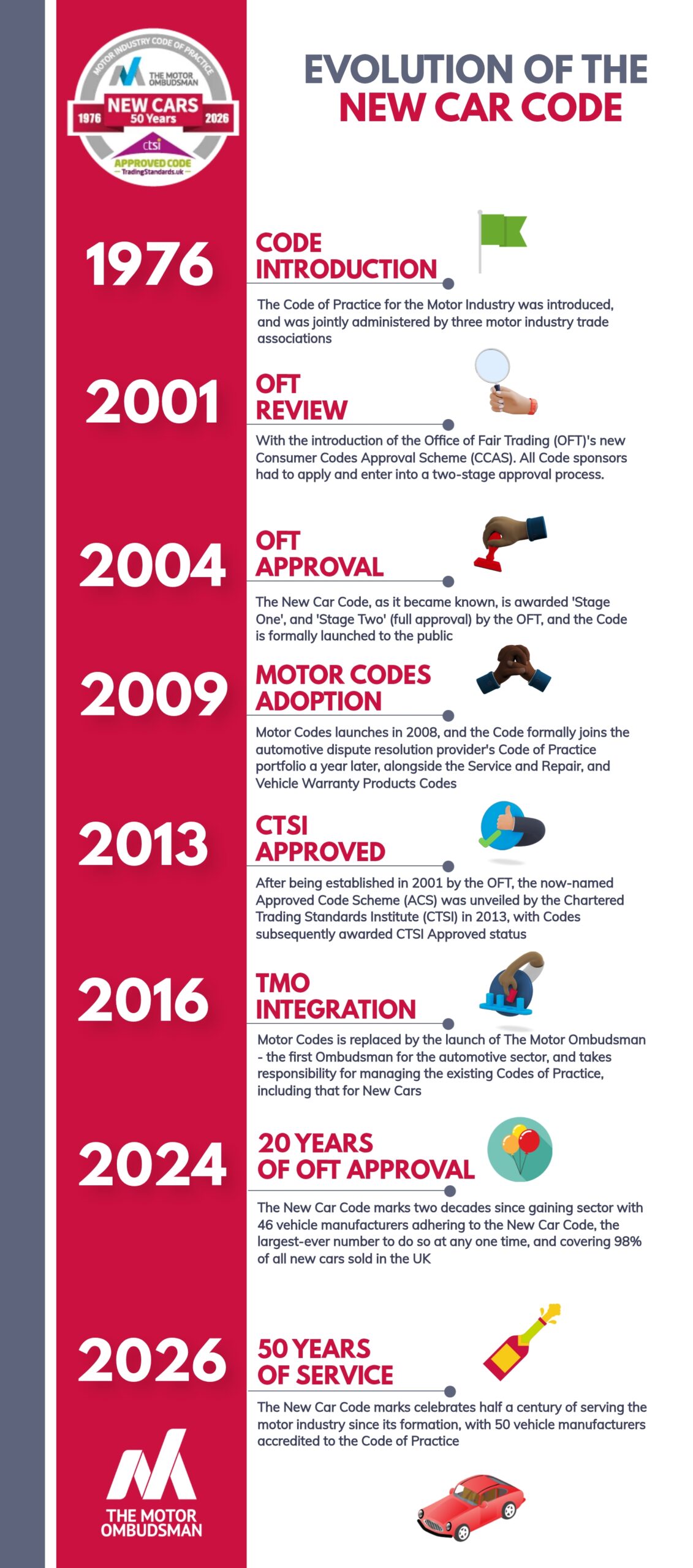
In 1976, three motor industry trade bodies came together as ‘pioneers’ to set an industry benchmark for the level of quality and service expected from vehicle manufacturers when consumers bought a new car. The result was the launch of the ‘Motor Industry Code of Practice’ – the first time that the automotive sector had ever had recommended guidelines for OEMs to follow in relation to the sale and maintenance of new models. It covered areas, such as advertising to consumers, and the ‘base’ warranties supplied with vehicles.
During the 50 years that followed, the New Car Code has remained unrivalled in its scope and content within the sphere of new cars. Similarly, it has evolved in line with the fast-changing automotive landscape and trends in consumer buying behaviour, as well as the emergence of the digital era and technological innovation within vehicles, to ensure continued effectiveness in promoting and safeguarding the interests of motorists when buying a new car.
Adhered to by 50 vehicle manufacturers offering models for sale in the UK, including some of the newest market entrants, and providing near-universal coverage (98%) of all new car purchases, the Code of Practice has grown to over 100 commitment areas to be followed by accredited carmakers. These clauses span the need for transparency when communicating with customers, to having effective in-house complaints handling procedures should a dispute arise.
The New Car Code’s importance and influence in the motor industry during the last half a century has been underlined by the sustained endorsement from respected industry authorities. For example, it became the first Code of Practice within any industry sector to be awarded the prestigious status of full approval of the former Office of Fair Trading (OFT). The baton has since passed to the Chartered Trading Standards Institute (CTSI) that now oversees the auditing and approval of the New Car Code – which has been under the ‘stewardship’ of The Motor Ombudsman since 2016, alongside three other Motor Industry Codes of Practice which extend across the entire customer vehicle purchase and ownership experience.
As well as providing all-important reassurance and peace of mind that businesses are striving for the highest standards, beyond those required by law, accreditation to the New Car Code similarly offers vehicle manufacturers a suite of advantages. First and foremost, being signed up to the Code grants privileged access to The Motor Ombudsman’s authoritative expertise, and the ability to signpost consumers to the body’s independent and impartial dispute resolution service in the event of an unresolved complaint, which comes at no cost to vehicle owners.
In addition, brands, especially those starting their retail journey in the UK, benefit from added exposure through The Motor Ombudsman’s marketing initiatives, and a bespoke profile on the Ombudsman’s website (TheMotorOmbudsman.org) – a portal visited by hundreds of thousands of consumers every year. Similarly, vehicle manufacturers have the valuable opportunity to join industry roundtables hosted by The Motor Ombudsman, and to participate in bespoke training programmes, as well as learning and development sessions on prominent topics, such as legislative updates and key trends affecting the motor industry.

Bill Fennell, Chief Ombudsman and Managing Director of The Motor Ombudsman, said: “A lot has changed in the last 50 years. However, one factor has remained constant, namely that a car remains a significant purchase for many, and consumers are therefore seeking a high level of service and quality from vehicle manufacturers, and to buy into a positive brand experience and product that meets their expectations.
“Reaching half a century of service is a milestone worthy of celebration. The New Car Code’s longevity and near‑universal adoption demonstrates just how vital it has become in giving consumers clarity, confidence and protection when making such an important purchase. With a record level of manufacturer participation, and motorists benefiting from greater coverage than ever before, the Code’s impact has never been stronger.
“As we look ahead to the next chapter of the New Car Code, we remain committed to working closely with vehicle manufacturers to champion best practice and to further strengthening the Code’s reach and effectiveness.”

“A lot has changed in the last 50 years. However, one factor has remained constant, namely that a car remains a significant purchase for many”
Bill Fennell
Chief Ombudsman and Managing DirectorTo view The Motor Ombudsman’s Motor Industry Code of Practice for New Cars, visit www.TheMotorOmbudsman.org/consumers/our-codes-of-practice/new-car-code
Read more about the history of the New Car Code at www.TheMotorOmbudsman.org/about-us/the-new-car-code-at-50
ENDS