

Disputes between consumers and businesses can arise where products or services do not meet expectations, or where, for example, issues occur due to the standard of customer service provided.
When something goes wrong with a vehicle, as they are often mechanically complex, this can have an impact on consumers from both a financial and emotional perspective, as a significant investment is often at stake, whilst vehicles are also an important means of mobility and independence.
ADR, or Alternative Dispute Resolution, exists to help conclude disputes quickly and fairly via an independent and impartial certified ADR body, when they cannot be settled through a business’s own in-house complaints process.
ADR can help consumers and businesses avoid going to court by offering a structured way to reach a resolution based on evidence, Codes of Practice, and relevant UK legislation.
As the leading ADR provider in the motor industry based on the volume of cases and contacts handled annually, The Motor Ombudsman plays an important role in helping resolve disputes between motorists and businesses.
What is ADR (Alternative Dispute Resolution)?
Alternative Dispute Resolution (ADR) is a collective term for ways of resolving disputes outside the court system – often at no cost to consumers. It involves an independent organisation reviewing a complaint and the evidence connected to it, before reaching a fair and non-biased decision according to what has happened.
The purpose of ADR is practical rather than procedural. Court action can often take time, involve significant cost, and require familiarity with formal processes that many people may not be familiar with.
ADR offers an alternative route that focuses on what happened, what information is available, and how the issue relates to consumer law and the standards that apply within the sector.
In the UK, ADR schemes operate across many sectors. The law says that businesses must signpost consumers to an ADR provider should they not be able to resolve the complaint via their own internal processes in the first instance.
For a simple breakdown of dispute resolution, see our What is ADR? knowledge base article.
Benefits of ADR
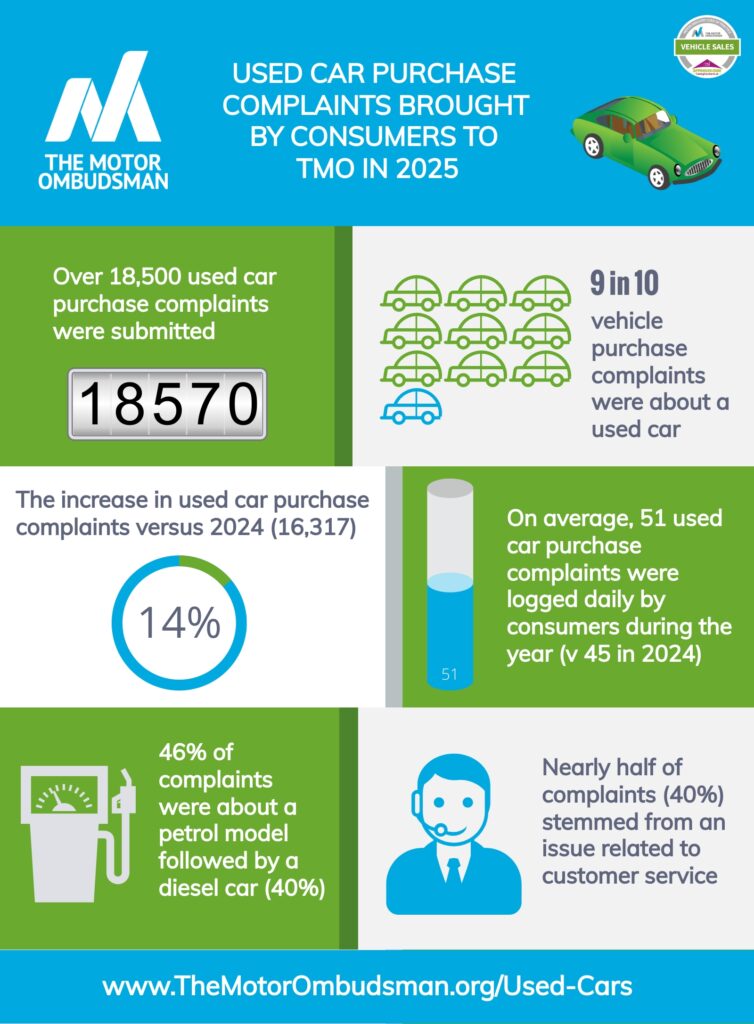
ADR is used across many sectors because it can provide a practical way to resolve disputes without the formality of court proceedings. In 2025, The Motor Ombudsman saw over 18,500 used car cases opened, a 14% increase from 2024.
The specific features of ADR will depend on the provider and the scheme, but there are a number of benefits that many consumers and businesses find helpful. Some of these are outlined below:
- It’s often free of charge: Many ADR schemes, such as The Motor Ombudsman, do not charge consumers to review a complaint, which can make the process more accessible than the legal route, where costly fees may be involved.
- It’s independent and impartial: ADR involves an impartial third party considering evidence provided by both sides to reach a fair outcome.
- It’s a structured process: ADR generally follows a clear set of steps, with defined stages for the review of a dispute.
- It’s non-confrontational: Because ADR is usually handled through written submissions, it can reduce direct confrontation and be seen as a less adversarial process than going to court, for example, where parties may come face-to-face for the case to be heard. This can be especially beneficial for complaints related to customer service, which accounted for 40% of used car disputes brought to The Motor Ombudsman in 2025.
What types of disputes can ADR be used for?
ADR is used across a wide range of sectors to help provide an independent route for resolving disputes between consumers and businesses. These include, financial services, energy, communications, retail, and transport, amongst others.
In general terms, ADR may be used where a consumer believes that a product or service has not met the required standard, or where there is disagreement about how an issue has been handled. In automotive cases, this may involve concerns that have first been raised directly with a dealership or other motor business. The specific types of disputes that can be considered will depend on the scope of the ADR scheme and the sector it covers.
Across sectors, disputes considered through ADR often relate to:
- The quality of goods supplied to consumers e.g. a car;
- The standard of customer service provided;
- Contractual terms or how they have been applied;
- Charges, fees, if you think you’ve been overcharged or car repair bills;
- If you think you’ve been sold a new or used car with problems;
- Faulty repairs or remedial work; and
- Warranty claims, guarantees, or aftersales support.
In the automotive sector, ADR may be used to consider disputes involving vehicle sales, servicing, repairs or vehicle warranty arrangements, including used car warranties, provided the matter falls within the scope of the relevant scheme and the business is covered by that scheme.
ADR provides a structured process for reviewing the course of events, and considering a consumer’s complaint against a car dealership or other automotive business in line with relevant consumer law, industry Codes of Practice, and the specific circumstances surrounding the case.
If you’ve bought a faulty vehicle from a dealership, you may first want to understand your refund rights before escalating your complaint. Read our guide on can you get a refund from a car dealership if your vehicle is faulty?
How ADR works for automotive business and car dealership complaints
Where a dispute relates to a vehicle or automotive service, the ADR process follows the same structured framework used across other sectors, but is applied in line with motor industry standards and relevant Codes of Practice.
Before a complaint can be referred to ADR, the business involved must first have had the opportunity to review and respond to the matter through its own internal complaints procedure. This ensures that the concern has been formally considered and that the business has set out its position. Between October 2024 and September 2025, 7% of cases were rejected because the consumer had not first contacted the business.
If the issue remains unresolved, and the business is signed up to an ADR provider, such as The Motor Ombudsman, the complaint may then be eligible for independent review. At this stage, the ADR provider will confirm whether the dispute falls within the scope of the scheme and whether it can proceed.
If accepted, both the consumer and the business are asked to provide relevant information to support their position. The complaint is then assessed against applicable consumer law and the relevant automotive Codes of Practice, taking into account the specific facts of the case.
ADR may also be relevant where a dispute involves a payment made before a vehicle purchase is completed. In some cases, this relates to a deposit, which may form part of the overall purchase price and can carry contractual implications depending on how the agreement is structured. Disagreements can arise where there is uncertainty about whether the deposit is refundable and under what conditions.
In other situations, the payment may be described as a car reservation fee, which is different to a deposit and is typically intended to secure the vehicle for a period of time rather than form part of the final purchase price.
Reservation fees can give rise to separate questions, particularly where expectations around cancellation, vehicle availability, or refund terms differ between the consumer and the business.
The different stages of Alternative Dispute Resolution
Although ADR schemes can vary slightly depending on the sector and the provider, the process generally follows a series of recognisable stages. These are designed to ensure that complaints are considered consistently and that both the consumer and the business have the opportunity to provide relevant information.
Raising the complaint
The process begins when the consumer raises the issue directly with the business involved. For example, this can be due to a concern related to a vehicle sale or repair, or because the level of customer service provided did not meet expectations.
This stage allows the business to review the complaint in the first instance, investigate what has happened, and respond, for example, with a suggested resolution and award, if deemed appropriate
Final response or deadlock
If the business is unable to resolve the complaint, it may issue a final response. In many sectors, businesses aim to provide this within a set timeframe, often up to eight weeks from when the complaint was first raised.
A final response confirms the business’s position and indicates that it does not intend to take further action through its internal complaints process. In some cases, this stage is referred to as ‘deadlock’, meaning that the complaint cannot be progressed further between the consumer and the business alone.
Referral to ADR
Once a business’s internal complaints process has been exhausted, the dispute may be referred to an ADR provider, such as The Motor Ombudsman, provided it falls within the scope of the relevant scheme. At this stage, the ADR provider will check whether the complaint is eligible to be reviewed and whether the business involved is signed to the ADR body.
Evidence review
If the complaint is accepted, both the consumer and the business are asked to submit relevant information to show what’s happened from their perspective. This may include documents, correspondence, and other material connected to the dispute. The ADR provider considers this information in line with applicable consumer law, industry standards, and any relevant Codes of Practice, taking into account the specific circumstances of the case.
Outcome
After reviewing the information from both parties, the ADR provider issues an outcome. This sets out the decision reached and any actions required on the business, which can be the suggested award to a consumer, an apology, or recommendations to change in-house procedures to avoid the re-occurrence of a similar complaint.
Depending on the scheme, the outcome may become binding on the business if the consumer accepts it. Consumers generally retain the option to consider other routes, such as going to court, if they choose not to accept the outcome, and can also withdraw from ADR at any time.
What evidence is needed for ADR?
Written evidence enables the ADR provider to establish the sequence of events, what was agreed between the parties, and how the matter was handled once concerns were raised. Clear documentation helps to clarify areas of agreement and dispute.
The types of evidence commonly considered during ADR include:
- Contracts or proof of purchase;
- Invoices and receipts;
- Inspection or diagnostic/technical reports;
- Service records;
- Warranty documents;
- Photographs or videos; and
- Written correspondence/conversations between the consumer and the business (e.g. e-mail trails)
The relevance and weight given to any document will depend on how directly it relates to the specific points in dispute. Dated records, written confirmations, and clear contractual terms can assist in establishing what was expected and what subsequently took place.
Where documentation is incomplete or unclear, it may limit the extent to which certain aspects of the complaint can be assessed.
How long does ADR usually take?
There is no single timescale that applies to all ADR cases, as the length of the process depends on the nature of the complaint, the amount of information involved, and how quickly relevant evidence is provided by both parties.
Before ADR can usually begin, a business is expected to have had sufficient time to review the complaint and respond. This initial period allows the business to consider the issues raised and explain how it has handled the matter.
In some situations, statutory consumer rights may also influence timing. Under the Consumer Rights Act 2015, certain remedies apply within defined timeframes following a vehicle purchase, including a 30-day short-term right to reject in specific circumstances. The timing of when an issue is raised, and how it is handled by the business, can therefore form part of the wider context when a complaint is reviewed through ADR.
Once a complaint is accepted by an ADR provider, the review process itself can vary in length. Cases where the facts are clear and the evidence is limited may be resolved in a shorter period of time.
Complaints that are more complex may take longer to assess. As a general rule, The Motor Ombudsman aims to deliver an outcome within 90 days of the evidence case file being completed (i.e. The Motor Ombudsman has everything from the business and the consumer), in line with guidelines laid down by the Chartered Trading Standards Institute (CTSI) and Alternative Dispute Resolution regulations.
ADR providers typically give an indication of expected timescales once a case is opened, so that consumers understand what to expect during the review. While ADR is generally quicker than court proceedings, the focus remains on reaching a fair and proportionate outcome rather than meeting a fixed deadline.
Do I need a lawyer to represent me?
ADR is designed to allow consumers to submit complaints without legal representation. The process is intended to be accessible and does not require specialist legal knowledge in order for a complaint to be reviewed.
ADR providers generally consider complaints based on written information and supporting evidence supplied by both parties. Consumers are asked to set out the details of the complaint and provide relevant documents, rather than present legal arguments or attend hearings.
This approach means that complaints can usually be considered without a lawyer acting on the consumer’s behalf. The review focuses on the circumstances of the dispute, the evidence provided, and how the matter relates to applicable consumer law and any relevant Codes of Practice.
Consumers may choose to seek independent advice, for example from a solicitor or a consumer advice service, if they wish. However, legal representation is not required in order to take part in ADR.
How The Motor Ombudsman can help with vehicle disputes
The Motor Ombudsman operates as an independent dispute resolution body for the automotive sector. It provides ADR for disputes between consumers and businesses that are accredited to one or more of its Codes of Practice.
Its role is to review complaints fairly and impartially, using the information provided by both parties, Codes of Practice, and relevant consumer law. It also publishes information, such as guides, to help consumers understand how dispute resolution works and what to expect if a complaint is referred.
Where a complaint cannot be resolved directly with a business, Alternative Dispute Resolution through The Motor Ombudsman may be available, depending on the type of issue, and whether the business is accredited.
Understanding ADR more broadly
Alternative Dispute Resolution (ADR) sits alongside other ways of resolving disputes. It does not prevent consumers from exploring alternative routes, and it does not replace the traditional court process. Consumers can also leave the process at any time.
What it offers is a refined, independent review process that is designed to be proportionate to consumer disputes, including those involving vehicles.
Understanding how ADR works, and when it may apply, can help consumers approach unresolved complaints with clearer expectations about the options available to them.