

When you take your car into the garage for routine maintenance or an ad hoc repair, you would likely expect that any agreed work is carried out with reasonable care and skill, which is also a requirement of the Consumer Rights Act 2015.
If the same fault returns after your vehicle has been on the ramp, or a new issue appears following a repair, this can be very frustrating, particularly if the work has cost a lot of money and you are highly dependent on your vehicle.
The following guide from The Motor Ombudsman outlines what you can do next, should your car still have ongoing issues following a repair.
Step 1: Check the paperwork from the repair
Start by gathering the documents connected to the repair. This may include the estimate, quote, invoice, job card, diagnostic report, warranty information and any messages exchanged with the garage or dealership before the work took place.
Check what was authorised, which parts were replaced, what labour was charged for, and whether the business explained any possible outcome to the repair before starting, as an issue may need one or more attempts to be fixed, for instance, if it is complex.
This can help show whether the original fault has returned, if the work was incomplete, or whether another issue may be affecting the vehicle.
Step 2: Raise your concerns with the garage or dealership
The next step is to contact the business directly that carried out the repair, and it is important at this stage to have all communication in writing (for example, by e-mail) so that there is a full record of your concerns from the outset.
Although this may prove a stressful situation, keep it factual and polite to give the best chance of a resolution. Explain what has happened, when the problem returned and why you believe the fault has not been resolved. Include the key facts, such as:
- The date you collected the vehicle;
- The mileage at the time; and
- Symptoms that have returned and any warning lights, noises or performance issues.
Ask the business to outline the next steps in writing about how these can be resolved.
As the owner of the vehicle, it is worth noting that you have the legal right to keep any parts that have been removed during a service or repair. However, you must notify the garage beforehand if you want to retain them, as businesses typically dispose of them once work has taken place.
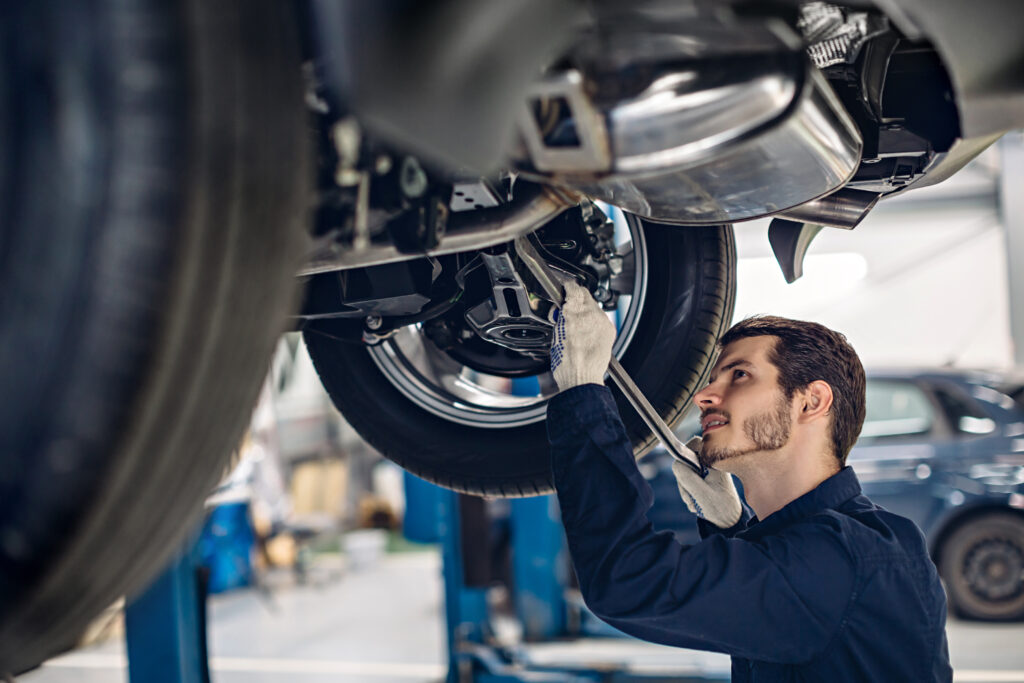
Step 3: Wait for the business’s response
Depending on the type of issue, the repairer may wish to bring your car back in to inspect it to help determine whether the issue was linked to previous work, for example.
At this point, it is worth asking whether there will be any further diagnostic charges, whether your car is safe to drive to take it back, and how long the inspection may take.
If, after having a look at the car, the business accepts that the repair has not been done right, it should offer to put things right at no charge to resolve any outstanding issues.
However, if the business does not agree, and does not believe the concerns are down to its workmanship, ask for its reasons in writing, and any supporting documentation, such as diagnostic reports or job cards.
The explanation may say that the original repair was completed correctly, that a different fault has developed, or that further work is needed – sometimes at an additional charge.
To recognise a good customer experience, the business may also offer a gesture of goodwill and reduce the amount payable on the invoice.
Step 4: Keep a record of all information
Keep copies of all evidence, such as documents and records of written communications with a business. This information can also be useful if the complaint needs to be escalated later to an ADR provider, such as The Motor Ombudsman, and may include:
- Invoices and receipts;
- Estimates or quotes;
- Diagnostic reports;
- Photos or videos of the fault;
- Emails, messages and letters;
- Recovery or breakdown reports; and
- Notes from calls or visits to the business.
Step 5: ‘Paying under protest’
Even if you don’t agree about the work that has been undertaken and it has not solved the issue, you will still need to pay any bills in line with any terms of payment and what was authorised.
Businesses do have a legal right to refuse to release your vehicle until you pay for the work you authorised them to complete. However, at this point, to release the vehicle, you can choose to ‘pay under protest’.
Paying under protest does not decide the outcome of a complaint should you choose to lodge one, but it can help show that the payment was disputed from the start.
Step 6: Make a formal complaint about the repair
If you do not agree with the work that has taken place, and your car still experiences the original or any new issues since the repairs, you can lodge a formal complaint in writing with the garage or dealership.
Supported by relevant documents linked to the repair, a complaint should outline:
- What repair was agreed;
- When the work was carried out;
- What problem remains or has returned;
- What the business has said so far; and
- What outcome you are asking it to consider.
Step 7: Know how consumer rights may apply
Under consumer law, a repair or service should be carried out with reasonable care and skill. If a garage or dealership has not completed the work properly, it may need to put the issue right within a reasonable time and without causing significant inconvenience, depending on the circumstances.
It is worth noting that, simply because a repair did not resolve the issue, this does not mean the work was necessarily completed without reasonable care and skill. Vehicles can be quite complicated and sometimes it is not always clear what is causing a particular fault or symptom.
The next step may depend on the type of repair, the available evidence, and whether the fault is linked to the original work. A paid repair, a warranty repair, or a repair connected to a vehicle sales complaint may each involve different paperwork and processes.
Step 8: Escalate the complaint if it remains unresolved
If the garage or dealership has had an opportunity to respond within the maximum eight-week period allowed, and your complaint remains unresolved, ask the business who their Alternative Dispute Resolution (ADR) provider is, such as The Motor Ombudsman.
ADR gives consumers and accredited businesses a structured route to resolve eligible motoring disputes without going straight to court. For some complaints, the next step may depend on the manufacturer, dealership or garage involved, particularly where the issue relates to a specific vehicle brand, such asp Kia, Land Rover or Vauxhall.
If your car is not fixed after repair, clear records can make the next stage easier to follow. The most useful information is usually what work was agreed on, what happened after the repair, how the business responded, and what evidence supports the complaint.
Want to know more? Find out if you can get a refund from a car dealership for a faulty vehicle, what are your rights with a used car warranty, how to dispute a car repair bill and if car reservation fees are refundable.