

Keeping an eye on tyre condition is a simple and important part of routine vehicle maintenance. A tyre’s tread depth affects how well a car grips the road, especially in wet conditions, and it equally impacts whether a vehicle meets the legal standard for use on UK roads.
At The Motor Ombudsman, we provide information to help consumers understand common motoring issues, including tyre condition, tread depth and when a replacement may be needed. If you are unsure what to look for, there are a few straightforward ways to check tyre tread and see whether it may be time to take a closer look.
What are the legal tyre tread depth requirements in the UK?
For cars, light vans and light trailers in the UK, the legal minimum tread depth is 1.6mm, and most tyres start off at around 8 to 9mm when new. This must be present across the central three-quarters of the tread and around the entire circumference of the tyre. If tread is worn below that point, the tyre is not legal for road use.
That legal minimum is an important starting point, but it is not the only thing worth checking. Tread can still be above the limit while the tyre shows other signs of wear or damage, such as uneven wear, bulges or cracks. Those issues can still affect the tyre’s condition and may mean it needs attention before it becomes a legal issue.
This is why it helps to treat tread depth as part of a broader check. Looking at the depth of the grooves is important, but so is keeping an eye on the overall condition of the tyre and whether it is wearing evenly across the surface.

How to check the tyre tread depth
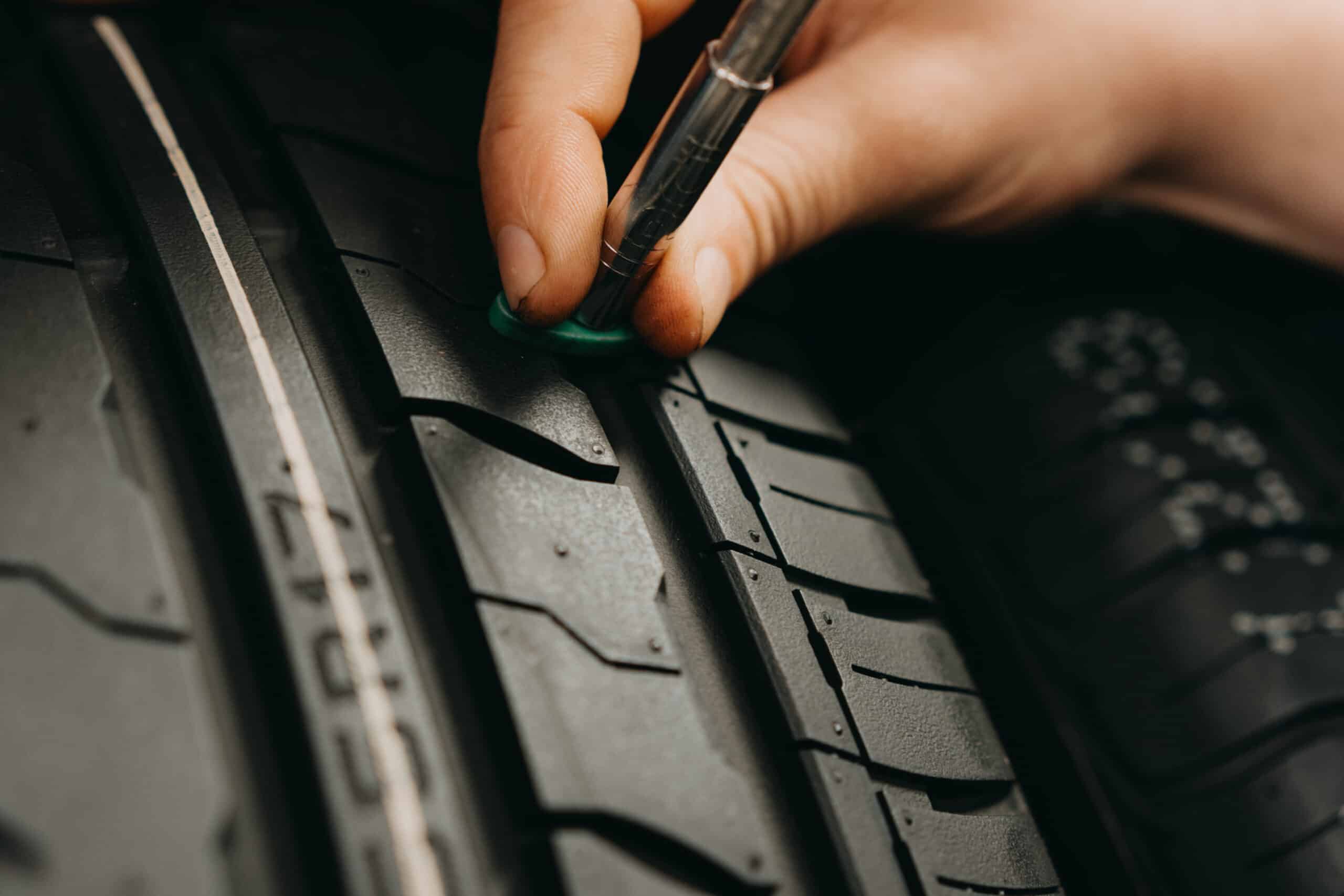
You can check the tyre tread depth anywhere, like at home, when the vehicle is parked on level ground. Look at each tyre in turn and check more than one part of the tread, because wear is not always even across the surface.
It also helps to look at the tyre more generally while you are there. If there are visible cracks, bulges, cuts or objects stuck in the tread, that may point to a problem beyond tread depth alone. Once you have done that initial check, there are two simple ways to look more closely at tread depth. The 20p test offers a quick indication, while a tread depth gauge gives a more precise reading.
How to measure tyre tread with a depth gauge
A tread depth gauge gives a clearer reading. Insert the probe into the main grooves of the tyre and measure at several points across the width and around the circumference. Repeat this on all four tyres.
This gives a clearer picture of whether a tyre is close to the legal minimum. It can also help show whether the tyre is wearing evenly. If the tread looks uneven, or you are unsure whether the tyre is close to the legal limit, our Business Finder can help you locate a garage signed up to The Motor Ombudsman’s Codes of Practice.
Using the 20p test to check tyre tread
Place a 20p coin into the main grooves of the tyre in a few different places. If the outer band of the coin is hidden, there may still be enough tread in that area. If the outer band is visible, the tread may be getting low.
This is useful as a quick check, but it only gives an indication. If the tyre is wearing unevenly, the tread may seem deep enough in one area while being much lower in another.
What tyre wear indicators are
Most tyres include built-in tread wear indicators. These are small raised bars set into the main grooves of the tyre. As the tread wears down, the surface of the tyre gets closer to those bars. When the tread is level with the wear indicators, it is a sign that the tyre may soon need replacing.
They can be useful as a visual prompt, but they should still be considered alongside the rest of the tyre’s condition. Tyres are also checked as part of the MOT, the annual test of a vehicle’s roadworthiness and emissions.
Can low tyre tread cause an MOT failure?
Yes. If tyre tread is below the legal minimum, it can result in an MOT failure. Other tyre defects, such as exposed cords, can also cause a vehicle to fail. This means worn tyres can affect both road legality and whether a vehicle passes its MOT.
When should tyres be replaced?
Tyres should be replaced when tread is at or near the legal minimum, or when there are visible signs of damage or uneven wear. This can include cuts, bulges or exposed cords. In some cases, a tyre may also need replacing sooner if its condition has deteriorated even though part of the tread is still above the legal limit.
If a replacement is needed, our Business Finder can help you find a garage aligned with The Motor Ombudsman’s Codes of Practice.