MICROSOFT OUTAGE:Our emails were affected by the outage however the issue is now seems to be resolved
A used car can give you access to a model or specification that would likely cost more to buy new. However, two cars of the same age can have very different histories, so the condition, paperwork and terms of sale deserve attention alongside the price.
The Motor Ombudsman’s used car buying guide provides impartial information to complement your research, whether you are purchasing your first car or replacing one you already own.
Why buying a used car is worth considering
Buying second-hand offers a wide choice of vehicles across different budgets. One of the many advantages of buying used is that you can often inspect and test drive the actual vehicle you are interested in buying, without waiting for a new order to arrive from the factory.
How big is the UK used car market?
There were 7.8 million used car transactions in 2025, according to the SMMT, an increase of 2.2% versus the volume seen in 2024. Used battery electric car (EV) sales reached 274,815 units, up 45.7%, reflecting both the growing demand and choice available to buyers considering all-electric power, rather than petrol or diesel, for example.
Only a small proportion of these sales end in a dispute. The used car cases brought to The Motor Ombudsman were equivalent to between 0.14% and 0.24% of transactions each year from 2023 to 2025, according to its Used Car Purchase Disputes report.
The advantages and considerations of buying a used car
Advantages
- Lower purchase price: An equivalent used model will often cost less than a new one.
- Depreciation: The car may already have passed through its steepest loss in value, although further depreciation is likely.
- Availability: Vehicles in stock may be ready sooner, subject to preparation and checks which often form part of an Approved Used programme.
- Research: Owner reviews, as well as MOT and car servicing records, can help you assess a model and individual vehicle.
Considerations
- Wear and tear: Previous use and maintenance affect condition and possible repair costs.
- Limited specification: Your preferred colour, trim or equipment may be unavailable locally.
- Warranty expiry: Original manufacturer cover may have ended.
- Battery health: A used electric car may have reduced battery capacity, affecting its range.
In our video on buying a used car, Bill Fennell (The Motor Ombudsman’s Chief Ombudsman and Managing Director) and the British racing driver and former Top Gear Stig, Ben Collins, discuss what to look for when purchasing a used vehicle.
How to set your budget for a used car
When choosing a used car, calculate what you can afford to buy and run, allowing for costs such as insurance, vehicle tax (VED), fuel or charging, vehicle servicing and MOTs, as well as ad hoc maintenance, such as replacing tyres.
Also include any quoted finance repayments and end of term / ‘balloon’ payments, as well as the cost of breakdown cover and any car warranty or service plans you intend to purchase.
It’s always best to have a contingency plan for any unexpected repairs should something arise.
What else should I check when buying a used car?
Before paying a deposit to the retailer, check the cancellation terms, as it may be non-refundable. Establish what happens if the purchase falls through, then obtain written confirmation and a receipt.
It’s also worth checking whether the retailer is accredited to The Motor Ombudsman’s Codes of Practice. If a problem arises that you can’t resolve with them directly, you can then bring your dispute to us free of charge. Find accredited businesses near you using our Business Finder.
What are the different ways to finance a used car?
You may pay outright, use a personal loan or arrange vehicle finance. Hire purchase (HP) usually involves a deposit and monthly instalments, with ownership transferring once the required payments and purchase fee are settled.
Personal contract purchase (PCP) generally offers options at the end of the agreement, including returning the vehicle or making a final payment to own it.
Compare the APR (Annual Percentage Rate) i.e. the annual interest rate, the total amount payable over the course of the finance term, the initial deposit due (which could come from part-exchanging another vehicle), any final repayments and any mileage or condition charges before signing or agreeing to proceed.
Petrol, diesel, hybrid or electric: which is right for you?
When looking at the fuel type for a used car, consider how you are going to use the vehicle for commuting or leisure – your usual journeys, planned annual mileage, and the estimated running costs. For example, for diesel models, check whether your driving allows the diesel particulate filter (DPF) to regenerate, as frequent short trips can contribute to blockages and unwanted repair bills.
For an electric car or plug-in hybrid, consider charging access and costs for charging at home and when using public points. Ask for available battery-health information and assess the likely vehicle range on your journeys, including in colder weather when it can decline.
Where to buy a used car: what are your options?
When purchasing a second-hand vehicle, options include franchised dealerships, independent retailers, online sellers, auctions and private individuals. The seller’s status and contract terms affect the protections available, including when purchasing online.
Retailers accredited to The Motor Ombudsman’s Vehicle Sales Code commit to high standards of service covering advertising, vehicle history checks, test drives and handover.
Private purchases offer fewer consumer protections, and The Motor Ombudsman is unable to review disputes where the sale transaction is between two private individuals. The same also applies when buying a used car at auction.
How to research a used car before you buy
The Motor Ombudsman’s #DrivingDecisions Used Car Buying Guide brings together considerations for research, fuel choice, deposits and warranties. Questions to ask when buying a used car include whether it has been modified, what checks the seller has completed, and which repairs are due.
To download and save down the full guide as a PDF document, please click on the image below:
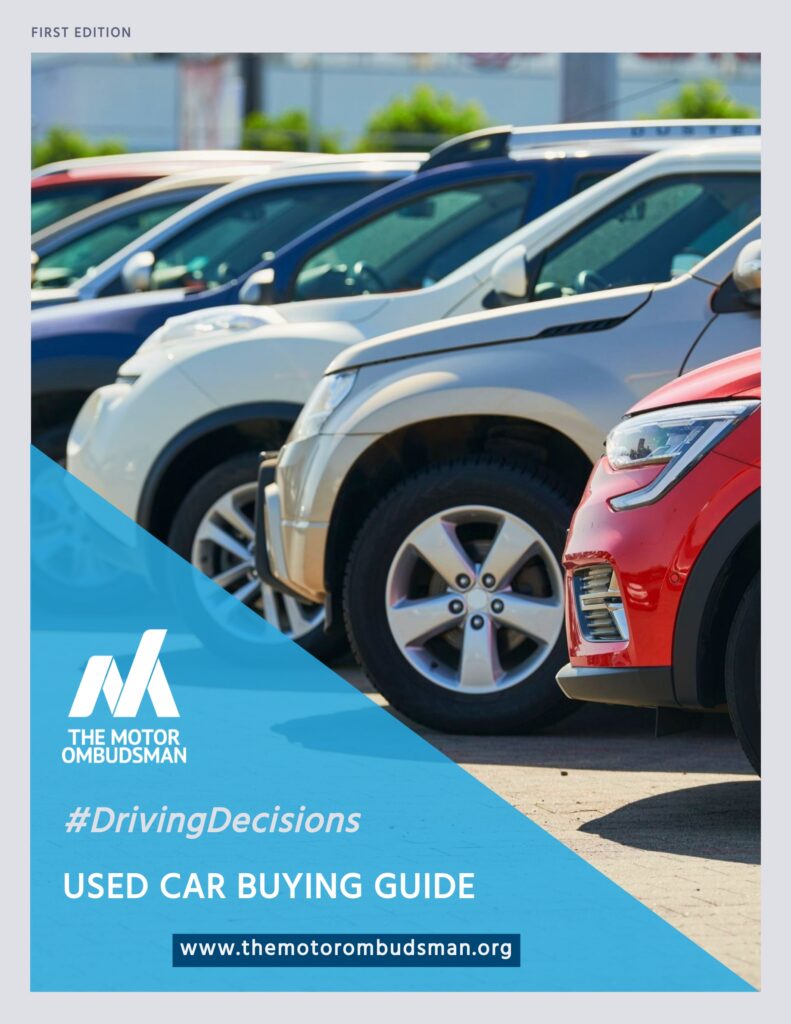
#DrivingDecisions covers the following subjects, and please click on the individual blue links below to download and save individual pages as a PDF from the guide:
 Benefits: Key advantages of buying a used car
Shortfalls: Key drawbacks of buying a second hand model
Research: Doing your homework from the outset
Power: Choosing the right fuel type to meet your needs
Retailers: Buying from a franchise or independent car showroom
Deposits: Key considerations before making an initial payment
Test drives: Asking questions when out on the road
Warranties: Considerations for choosing an extended warranty policy once the vehicle manufacturer’s coverage has expired
What to look for when inspecting a used car
Examine the bodywork, tyres and interior, looking for damage, leaks and signs of uneven wear. Try the lights, windows, locks, air conditioning and infotainment equipment, and ask the seller to explain any warning lights.
An independent qualified mechanic’s inspection (which may come at an additional cost), may help identify concerns you cannot assess yourself. Record any agreed repairs in writing before purchase.
What to check before a test drive
Bring your driving licence and confirm insurance arrangements, including any excesses, which can often vary. Having child car seats, pushchairs / buggies or any other equipment you regularly carry to hand can help you assess whether the vehicle has enough space.
During a test drive, check seat adjustment, visibility, steering, braking and gear changes. Listen for unusual noises and try different road types where possible, and raise any concerns with the seller before making a purchase.
How to check a used car’s history
Compare service records (digital or physical), invoices, receipts and the MOT history with the advertised mileage, and the vehicle identification number (VIN) to the car’s V5C logbook. MOT records can show previous failures, advisories, recorded mileage, recurring concerns, as well as if there are any outstanding recalls on the vehicle.
A paid-for vehicle history verification, such as an HPI check, can flag recorded finance, theft, insurance write-offs and mileage discrepancies.
In fact, HPI reports that one in three cars it checks has a hidden history, and one in fourteen has a recorded mileage issue. These figures relate to vehicles checked by HPI.
The Motor Ombudsman’s vehicle recall checker can identify outstanding safety recalls for participating manufacturers. Contact the manufacturer if its vehicles are outside the scheme.
What are your legal rights when buying a used car?
Under the Consumer Rights Act 2015, a car bought from a retailer must be of satisfactory quality, fit for purpose and as described. Expectations take account of factors including age, mileage and price.
Your legal rights when buying a car may include rejecting it within the first 30 days if it fails to meet these standards. After that, the retailer normally has an opportunity to repair or replace it.
A refund for a faulty vehicle may be available if the remedy fails or other statutory conditions apply, with a possible deduction for use. The circumstances and timing affect the outcome.
What are the most common issues when buying a used car?
The Motor Ombudsman recorded 18,570 used car cases in 2025, up 14% from 16,317 in 2024, representing 40% of all consumer cases opened.
The Used Car Purchase Disputes report found these were the leading causes of used car disputes in 2025:
- Customer service: 64%.
- Drivetrain, including engine and turbo faults: 16%.
- Chassis, including brakes, tyres, clutch and gearbox: 9%.
- Vehicle exterior: 4%.
- Interior: 4%.
- Electrical systems: 2%
- Fuel and emissions systems: 1%.
- Steering: 1%.
Customer service disputes cover problems at or after the point of sale, from vehicle preparation and disclosure to communication and completing repairs. Claimed defects present at the point of sale made up 35% of these disputes in 2025.
Customer service concerns included undisclosed vehicle changes, unanswered enquiries and warranty cover differing after purchase. Bill Fennell, Chief Ombudsman and Managing Director, said:
“For a product which often carries a significant level of spend for households, a high level of customer service remains paramount.”
Download The Motor Ombudsman’s Used Car Purchase Disputes report (PDF) for the full findings, including the most common causes of disputes, what consumers asked for, how cases were decided and real case studies.
How to negotiate the price of a used car
Do plenty of research, for example online, as the price of vehicles can vary by retailer, and geographic region. Compare vehicles of a similar age, mileage, specification and condition before discussing the price.
There is often scope to negotiate the price with the seller, which is why it is important to be equipped with the right information before doing this. Check the total cost and record the agreement in writing prior to making a purchase.
Understanding used car warranties
Check whether manufacturer cover remains, a dealer warranty is included or an extended vehicle warranty is available. Used car warranties may cover specified mechanical and electrical failures, with exclusions and claim conditions varying between providers.
The average car involved in a used car dispute brought to The Motor Ombudsman between 2023 and 2025 was 4.7 years old, so most problems arose after a typical three-year manufacturer warranty had ended.
Compare covered parts, wear-and-tear exclusions, claim limits, excesses, labour-rate limits and servicing requirements. Establish whether diagnostics are covered and repairs need prior authorisation. For electric cars, check battery cover separately, including any capacity-related conditions.
A warranty is additional to your statutory rights, so its expiry or exclusions do not automatically remove the retailer’s legal responsibilities.
What to do if something goes wrong after buying a used car
Contact the seller promptly, explain the problem and state the outcome you seek. Keep the advert, invoice, warranty terms, service records, correspondence and any diagnostic evidence. Check with the relevant business before authorising repairs that could affect a warranty claim. A common condition of making a warranty claim is having a complete servicing schedule that meets the recommended servicing intervals of a vehicle manufacturer.
How The Motor Ombudsman can help
The Motor Ombudsman’s free Alternative Dispute Resolution (ADR) service for consumers considers eligible disputes with Code-accredited businesses. You can escalate an unresolved complaint with a business after eight weeks, or earlier if you receive a final response from them that you disagree with.
Its impartial assessment considers evidence from both parties, the relevant Code of Practice and consumer law. Checking the seller’s accreditation to an ADR body prior to making a purchase helps establish whether this route will be available should a dispute arise after taking ownership of a used car.