

With the summer holidays coming to an end, and the new academic year getting under way for millions of pupils across the nation, many will be returning to the daily routine of the school run from today.
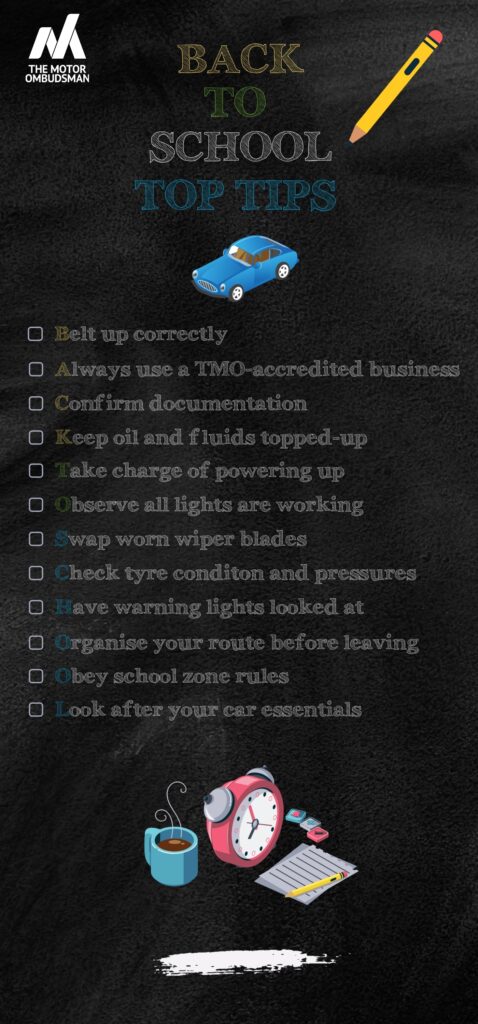
The Motor Ombudsman has 12 top tips to help vehicle drivers stay safe and legal, and reduce the risk of an unexpected breakdown:
Belt up correctly
Before setting off, check that all seat belts in the front and rear are working properly, and that child car seats are the right size and securely fitted in line with the manufacturer’s instructions. The law says that drivers are responsible for ensuring passengers under 14 are correctly restrained, while passengers aged 14 and over are responsible for wearing their own seat belt.
If a child under 14 is found not to be belted up, drivers can face a fine of up to £500 according to GOV.UK.
Always use a Motor Ombudsman-accredited business
If your vehicle needs routine servicing, repairs, an MOT, tyres or other maintenance, The Motor Ombudsman’s popular online Business Finder can help you search for independent garages and franchised dealers accredited to its Service and Repair Code, in your local area and beyond. Choosing a business that is signed up to the Code gives added peace of mind, as these businesses are striving for the highest standards of work and service.
Confirm that all documentation is up to date
Before taking to the road, make sure your vehicle has valid insurance, a current MOT certificate, and is taxed. It is also worth checking that your service history is up to date, as keeping to the manufacturer’s recommended service schedule can help your car run reliably and is often an essential condition of being able to make a warranty claim in the event of a listed fault occurring.
Keep oil and essential fluids topped up
Oil, coolant and screen wash all play an important role in keeping a car safe and reliable. Check levels when the vehicle is cold and parked on level ground, and only top up using the correct products recommended for your make and model. Using the wrong grade of oil can lead to mechanical issues and costly repairs.
Take charge of powering up
If your car has been parked for a longer period while you have been away, a short drive can help recharge the battery and reduce the chance of a flat-battery inconvenience on a busy morning. Similarly, electric vehicle (EV) drivers should also plan ahead by checking charge levels and plugging in before the start of term.
Observe all lights are working
As mornings and evenings gradually become darker thanks to the shorter daylight hours, working lights are essential for visibility and safety. Check headlights, brake lights, indicators, fog lights and rear lamps are all shining bright before setting off. If a bulb has failed and you are unsure how to replace it, ask a qualified professional at a Motor Ombudsman-accredited garage or franchise dealer workshop for help.
Swap worn wiper blades
Clear visibility out of the front and rear screens is vital, especially during periods of unsettled weather as the autumn sets in. Look for streaking, smearing, split rubber or squeaking when the wipers are in use.
If the blades are not clearing the windscreen effectively, replace them with the correct specification for your vehicle. If you need help, visit a repairer that is accredited to The Motor Ombudsman.
Check tyre pressure, tread and condition
Tyres should be inflated to the vehicle manufacturer’s recommended pressure and checked for cuts, bulges, cracking or uneven wear, especially if cars have been stationary for prolonged periods during the summer break.
The legal minimum tread depth for cars is 1.6 mm across the central three-quarters of the tyre and around the full circumference, but drivers should not wait until tyres reach the legal limit before seeking advice at an accredited garage or tyre fitter if they look worn or damaged.
Have warning lights looked at without delay
Dashboard warning lights are designed to alert drivers to potential issues, from routine maintenance reminders to more serious faults, such as those related to the engine. Seek professional advice promptly if a warning light stays on or appears while driving.
Organise your route before setting off
Plan your journey before setting off, especially if school drop-off arrangements, parking restrictions or nearby road layouts have changed since the end of last term. Leaving a little extra time can reduce the temptation to rush, make it easier to find a safe place to stop, and help keep the school gates clearer for children, parents and other road users.
Obey school zone rules
Pay close attention to local speed limits, school keep-clear markings, pedestrian crossings and any restrictions on stopping or parking near the entrance. These measures are there to protect pupils and families at the busiest times of day, so patience and consideration are just as important as finding the most convenient place to drop off school-goers.
Look after your car’s essentials
Before the school run, check that all the essentials are in the car, such as de-icer, a scraper, sunglasses, a phone charger and any breakdown or insurance contact details are easy to find. Keeping these items to hand can make journeys less stressful if the weather changes, delays occur or you need assistance while away from home.
To view The Motor Ombudsman’s dedicated information resources on Motoring Advice, visit www.TheMotorOmbudsman.org/category/motoring-advice