
Winter weather can place additional demands on a vehicle, with lower temperatures affecting the battery, and rain, ice, fog and snow making journeys more difficult.
A few checks before the season begins can help identify developing problems and prepare motorists for journeys where delays or breakdowns may be more likely.
The Motor Ombudsman provides information for consumers and businesses accredited to our Codes of Practice. These winter driving tips cover vehicle maintenance, journey preparation and the UK rules that continue to apply when roads are affected by snow, ice, rain or fog.
1. Carry the right kit for winter driving
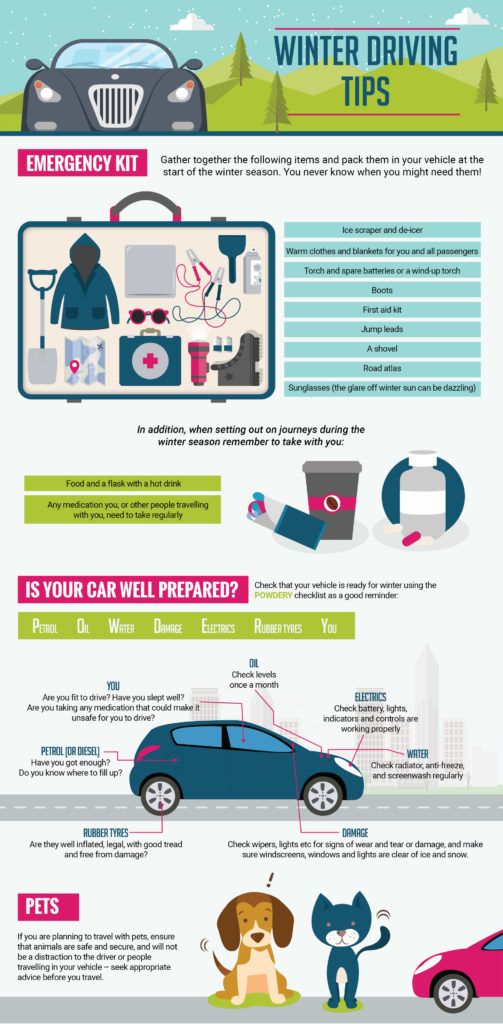
It’s important to be prepared all-year-round, not just for winter. An emergency kit can help motorists remain warm, visible and able to contact assistance if a vehicle breaks down or becomes stranded. Consider carrying:
- A mobile phone charger, in-car adaptor or battery pack;
- A working torch and spare batteries;
- An ice scraper and de-icer;
- Warm clothing, boots and blankets;
- A high-visibility jacket;
- A first-aid kit;
- Drinking water and non-perishable food;
- A shovel when heavy snow is forecast; and
- Breakdown cover and insurance details.
Before a longer winter journey, motorists can prepare for possible congestion, delays and changing road conditions by checking the route, allowing additional time and taking regular breaks.
2. Check the battery before colder weather arrives
Cold weather can affect battery performance, while regular use of the headlights, heating and demisters places greater demand on electrical systems.
Slow engine cranking, difficulty starting or dimming lights may indicate that the battery needs attention. A reputable garage can test its condition and explain whether charging or replacement may be required.
Motorists who use their vehicles infrequently could consider investing in a trickle charger (also known as a battery maintainer), which is a small device that plugs into the mains and connects to your car battery to keep it topped up over time. Follow the manufacturer’s instructions, as the appropriate equipment and charging process may vary between vehicles.
3. Check antifreeze, oil and screenwash levels
Engine oil, coolant and screenwash should be kept at the recommended levels specified in the vehicle handbook. Use products that meet the manufacturer’s requirements, as specifications can differ between makes, models and engine types.
Coolant contains antifreeze to help protect the engine at lower temperatures. A garage can check the concentration where a motorist is unsure whether the mixture provides sufficient protection. The engine should be allowed to cool before the coolant reservoir is opened.
Winter screenwash is formulated to operate at lower temperatures and can help remove salt, grit and road spray from the front and rear screens. Water alone may freeze and may be less effective at clearing glass surfaces.
4. Inspect tyres and brakes for winter driving
Check all tyres for cuts, bulges, cracking, embedded objects and uneven wear. Tyre pressures should match the manufacturer’s recommendations and may need adjusting when the vehicle is carrying additional passengers or luggage (refer to the owner’s manual or a sticker on the door sill / inside the fuel filler cap).
For cars, the legal minimum tyre tread depth in the UK is 1.6mm across the central three-quarters of the tyre and around its entire circumference. Tyres should also be the correct type and size for the vehicle and free from damage that could make them unsafe.
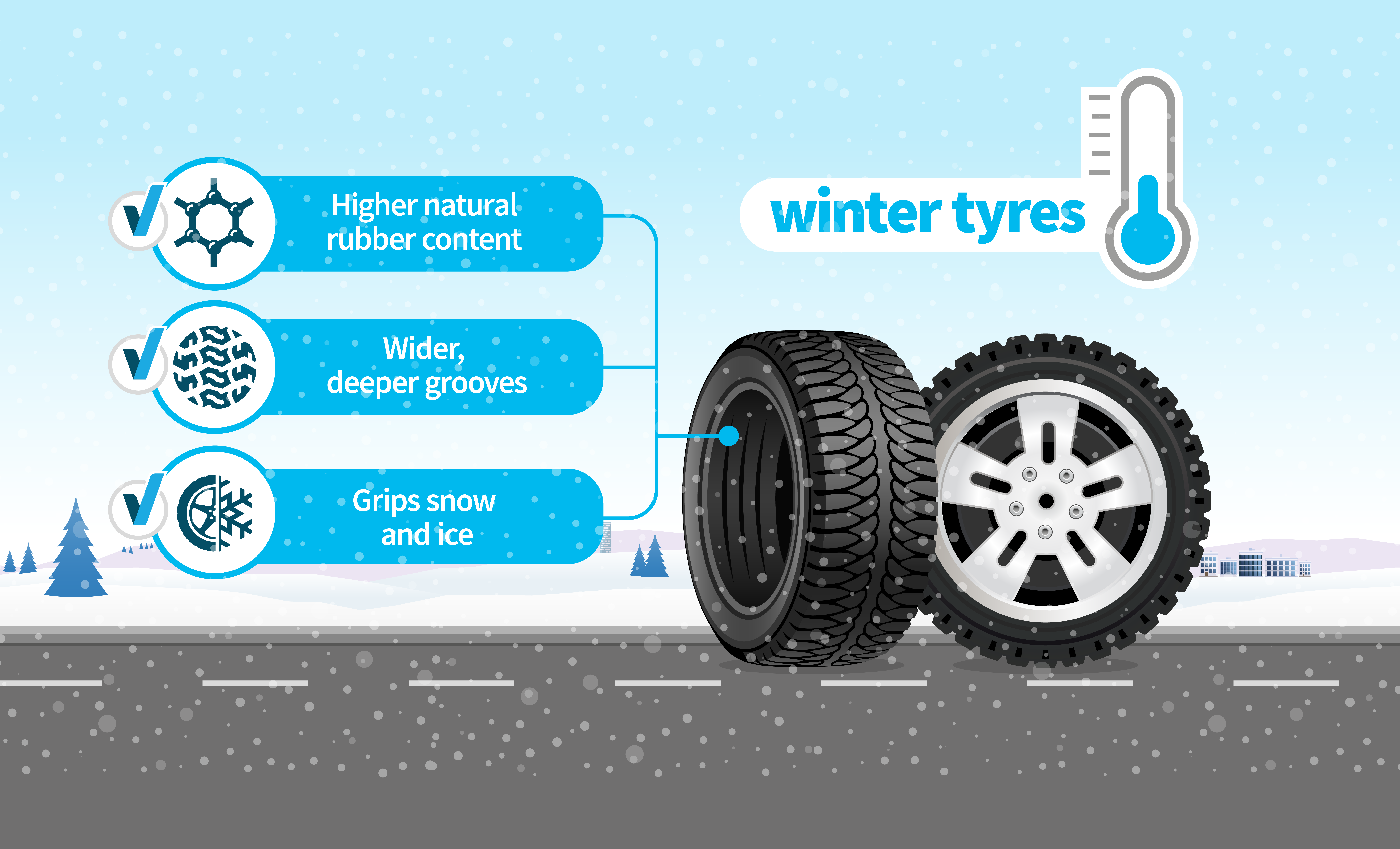
Winter tyres are designed for use in colder temperatures and on wet, icy or snow-covered surfaces. They are not compulsory in the UK, and whether they are appropriate will depend on the vehicle, local conditions and how it is used.
Motorists considering a change should understand the differences between winter and summer, tyres, as well as any requirements for fitting and storage.
Brakes should respond evenly and without unusual noises, vibration or changes in pedal feel. Any concerns should be inspected by a qualified garage before the vehicle is used in difficult conditions.
5. Keep lights, windows and bodywork clear
Shorter daylight hours and poorer visibility make working lights particularly important. Check the headlights, brake lights, indicators, reversing lights and fog lights, and clean away any dirt or salt covering the lenses.
Wiper blades should clear the windscreen without leaving heavy streaks. The heating and demisting systems should also provide a clear view through the front and rear windows.
Salt and grit can collect on the bodywork, wheel arches and underside of the vehicle. Regular washing can help remove this residue, while paint chips and exposed metal may need attention to reduce the likelihood of corrosion developing.
Additionally, condensation can build up inside a vehicle during colder weather when warm, moisture-laden air comes into contact with cold windows, reducing visibility. To help prevent this, use the air conditioning or demister regularly, consider using moisture-absorbing products, and remove excess moisture from the cabin by drying or removing wet coats, umbrellas and floor mats.
6. Use a winter driving checklist
As the days get shorter, and with winter bringing tougher driving conditions on the road, making sure that your vehicle is fully roadworthy, whether for the daily commute or for the holiday getaway, is essential to staying safe.
We have therefore introduced a handy “ticklist” to guide you through the key questions and considerations when taking your car into a garage for a winter check, and to help you prepare for the colder weather.
For example:
- Is the garage accredited to The Motor Ombudsman’s Service and Repair Code of Practice?
- Do you need winter tyres and how much do they cost?
- Do you have an ice-scraper and de-icer in the car?
- Is your MOT, insurance and tax up to date?
- Do you have a shovel at home in case of thick snow?
You can download and print a copy of The Motor Ombudsman’s winter ticklist here. Alternatively, click on the button below to open the ticklist in a new window.
7. Information for driving in snow, ice, rain and fog
Before travelling, check the forecast and road conditions, and allow extra time if severe weather is expected. Drivers should also prepare for snow, ice, rain and reduced visibility by checking that the vehicle is roadworthy and carrying any items they may need if delayed.
Stopping distances may be at least twice as long on wet roads as they are in dry conditions and can increase further on snow or ice. Drivers should reduce their speed and leave a larger gap from the vehicle ahead.
Before setting off, clear snow and ice from the windows, roof and bonnet so that it does not obstruct the driver’s view or create a hazard.
Headlights must be used when visibility is seriously reduced, generally when a driver cannot see beyond 100 metres. Fog lights may also be used, but should be switched off once visibility improves because they can dazzle other road users and obscure brake lights.
8. Winter weather driving fines in the UK
There is no single offence known as a winter driving fine. However, motorists remain responsible for keeping their vehicles roadworthy, maintaining a clear view and driving in a way that reflects the conditions.
Potential penalties may apply where:
- One or more tyres are below the legal tread depth or otherwise unsafe;
- A vehicle is used in a dangerous condition;
- Snow, ice or condensation obstructs the driver’s view;
- A number plate cannot be read because it is covered by snow, mud or road dirt;
- Fog lights are used when visibility is no longer seriously reduced; or
- Snow falls from a vehicle and creates a danger for other road users.
Driving a vehicle in a dangerous condition can result in a fine of up to £2,500, three penalty points and a possible disqualification. An illegal tyre may also lead to a fine of up to £2,500 and three points for each affected tyre.
9. Arrange a winter vehicle service or maintenance check
A winter vehicle check or service at a garage, for example, may cover the battery, tyres, brakes, lights, fluid levels, wipers and other components that could affect the vehicle during colder weather.
Following the manufacturer’s servicing schedule can also help identify developing faults and may be a condition of the vehicle’s warranty. The Motor Ombudsman’s Business Finder can help you locate a garage accredited to our Service and Repair Code.