The Ultimate Guide to Maintaining Car Tyres and Tyre Safety
Tyres are the only part of a vehicle that separates it from the road, and therefore maintaining them in a safe and legal condition is vital. Tyres affect grip, braking, steering and stability, and they also need to meet legal requirements for use on UK roads. At The Motor Ombudsman, we provide information to help consumers understand common motoring issues, including tyre condition, tread depth, tyre pressure and when replacement may be needed.
In this guide dedicated exclusively to tyres, you will find information about the following subjects, amongst others:
Why tyre maintenance matters
Tyres are the only part of the vehicle in contact with the road, so their condition can affect how the car responds when braking, turning, driving in wet weather or carrying extra weight.
Tread depth is an important part of this. The grooves in a tyre help move water away from the road surface, supporting grip in wet conditions. As tread becomes lower, the tyre may become less effective at doing this.
Pressure also affects how the tyre sits on the road. If a tyre is underinflated or overinflated, it may wear unevenly and change how the vehicle feels when driven. It can also affect fuel use over time.
Tyre condition has a legal side as well. Tyres are checked as part of the MOT, and a vehicle can fail if they do not meet the required standard. In some cases, a tyre may already be illegal for road use before the MOT date arrives.
How to maintain car tyres
Maintaining car tyres starts with looking at them properly. This does not need to be complicated, but it does mean taking a closer look than a quick glance across the driveway.
With the vehicle parked safely on level ground, check each tyre in turn. Look at the tread, the sidewall and the general shape of the tyre. A tyre that looks flatter than the others may be underinflated. A tyre with cracks, bulges, cuts or exposed cords should be checked more carefully.
It is also worth noticing how the car feels. Pulling to one side, vibration through the steering wheel, repeated tyre pressure warnings or a change in road noise can all suggest that something needs attention.
If anything looks unusual, our Business Finder can help you locate a garage signed up to The Motor Ombudsman’s Codes of Practice.
Why is tyre tread important and how do you measure it?
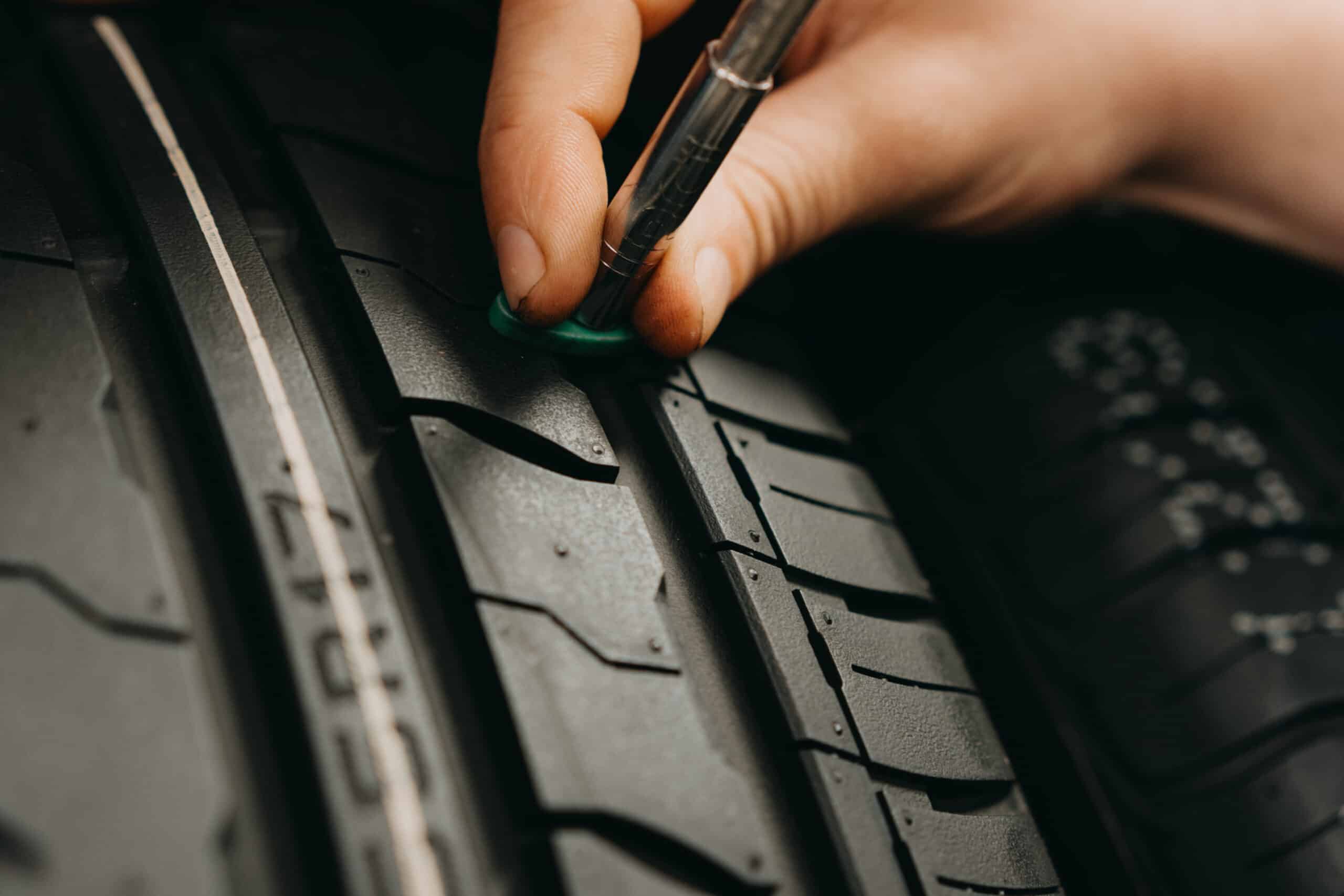
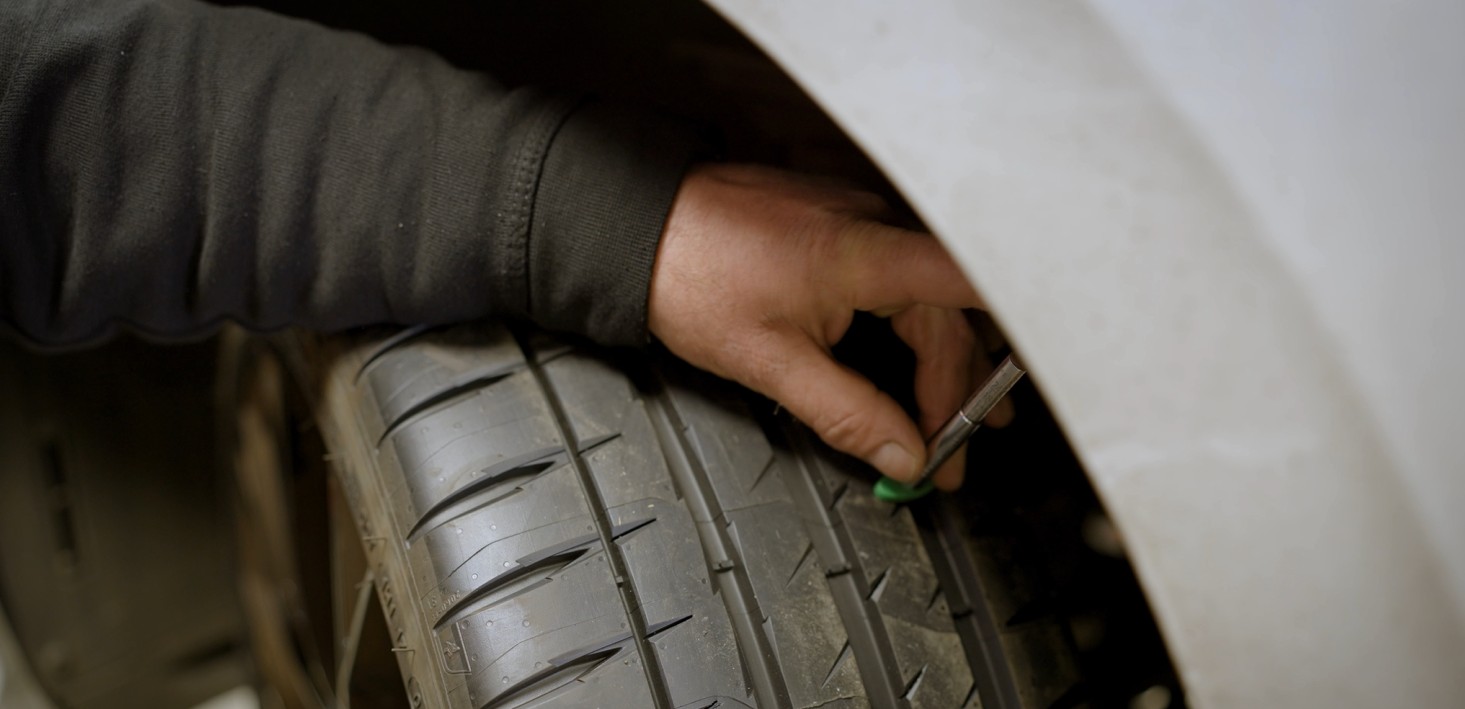
The role of the tread, made up of blocks and grooves on the face of the tyre, is to keep the tyre in touch with the road. The depth of the tread decreases over time with the use of the vehicle, and starts at around 8mm when a car tyre is brand new.
In the UK, the minimum legal tread depth is 1.6mm across the central three-quarters of the tyre, and the tread must be at least this figure across its entire circumference.
The most accurate way to check your tyre tread is using an analogue or digital tread depth gauge, which can be inserted between the groves across the top of the tyre. It is important that the gauge is set to zero on a flat surface before taking any measurements.
If you’re unsure what to look out for when measuring the tyre tread depth, find a local Motor Ombudsman-accredited garage or tyre fitter here.
What is tyre pressure?
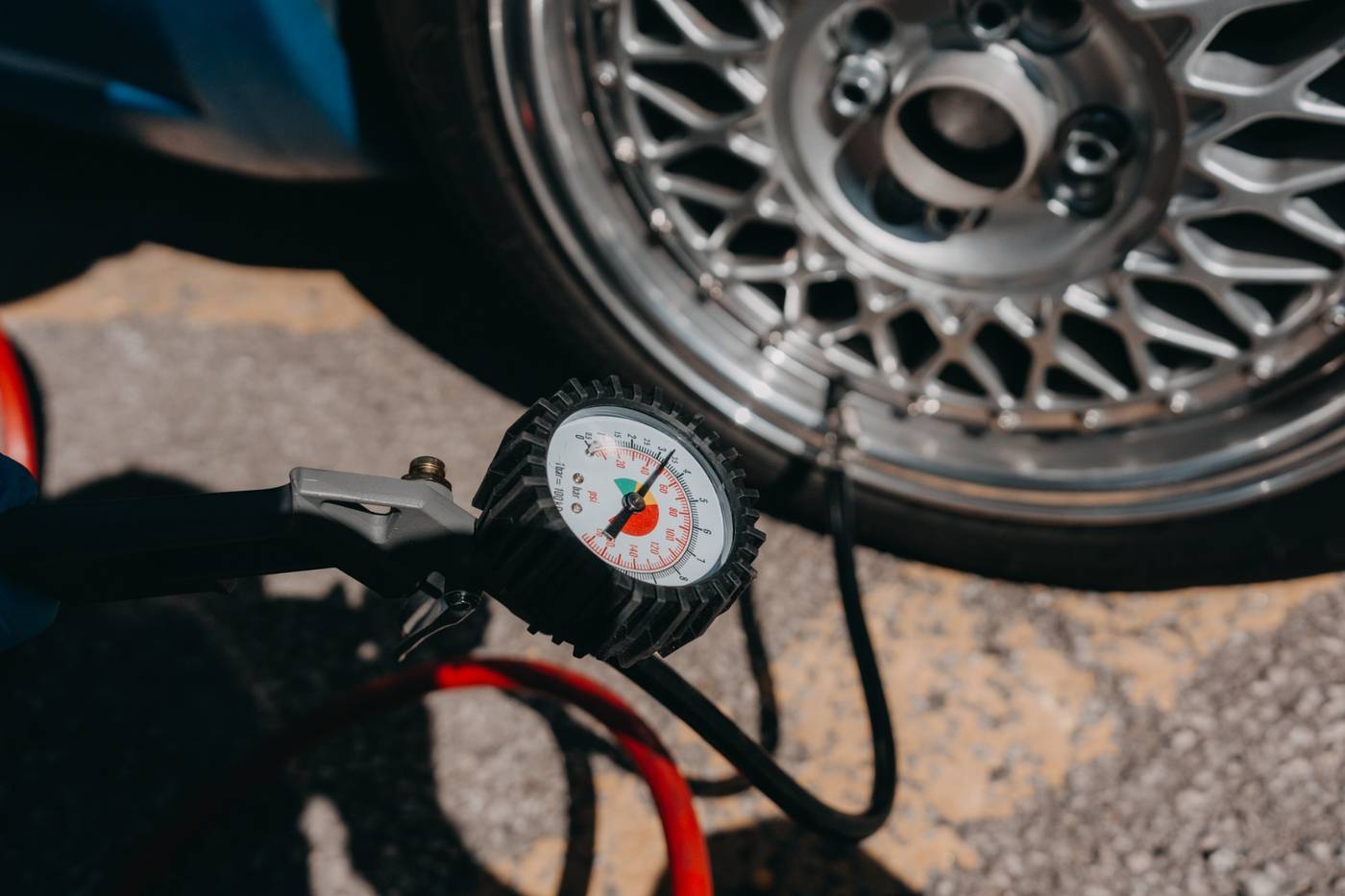
Tyre pressure refers to the amount of air inside your tyres, with the amount of air inserted measured in pounds per square inch (psi) or bar.
Pressure means everything in the world of tyres. You will find the vehicle manufacturer-recommended levels for the front and rear tyres (which can sometimes be different) in your car’s handbook, and they can also often be seen on the sill of the driver’s side door or on the inside of the fuel filler cap.
Checking your tyre pressure is best carried out when the tyres are cold, before a long journey or after the vehicle has been parked for a while. Driving heats the tyres, which can affect the reading.
If one tyre repeatedly loses pressure, there may be a slow puncture, valve issue or another fault. Topping it up may deal with the immediate warning, but it does not explain why the pressure is dropping.

Convert your measurements with our handy bar to PSI converter:
Bar to PSI Converter
For an approximate result, multiply the pressure value by 14.504
Avoid over inflating tyres
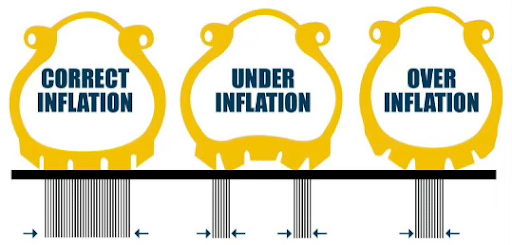
When tyres are under-inflated, i.e. when the pressure is too low, this causes too much of the tyre to be in contact with the road, thereby increasing friction, reducing tyre life and affecting braking performance. Tyres with less air than required also leads to premature wear on the outer edges.
In contrast, over-inflation, i.e. when there is too much air in the tyre, leads to the centre of the tyre wearing out much faster than the outer edges. This can also affect the braking performance and lead to increased fuel consumption.
Image courtesy of TyreSafe
What are the dangers of part-worn tyres?
“Nearly a third of UK adults say they would consider buying part-worn tyres”*
According to the government Department for Environment, Food & Rural Affairs (Defra), over five million part-worn tyres are supplied in the UK every year, with over a third of UK adults saying they would consider buying part-worn tyres.
Part-worn tyres are effectively used, second-hand tyres that have been removed from another vehicle, that are then often sold and fitted to another vehicle.
Even though it is not illegal for part-worn tyres to be sold in the UK, there are strict rules on how they should be labelled so that consumers clearly know what they are buying. Read more about this in our guide to part-worn tyres.
Part-worn tyres may appear a bargain and much cheaper than when buying new, but opting for used tyres can put vehicle occupant safety at risk first and foremost, and not be legal when on the road, leaving vehicle owners open to heavy fines.
Stuart Lovatt, the Chair at TyreSafe, recently spoke to The Motor Ombudsman about the dangers of buying part-worn tyres:
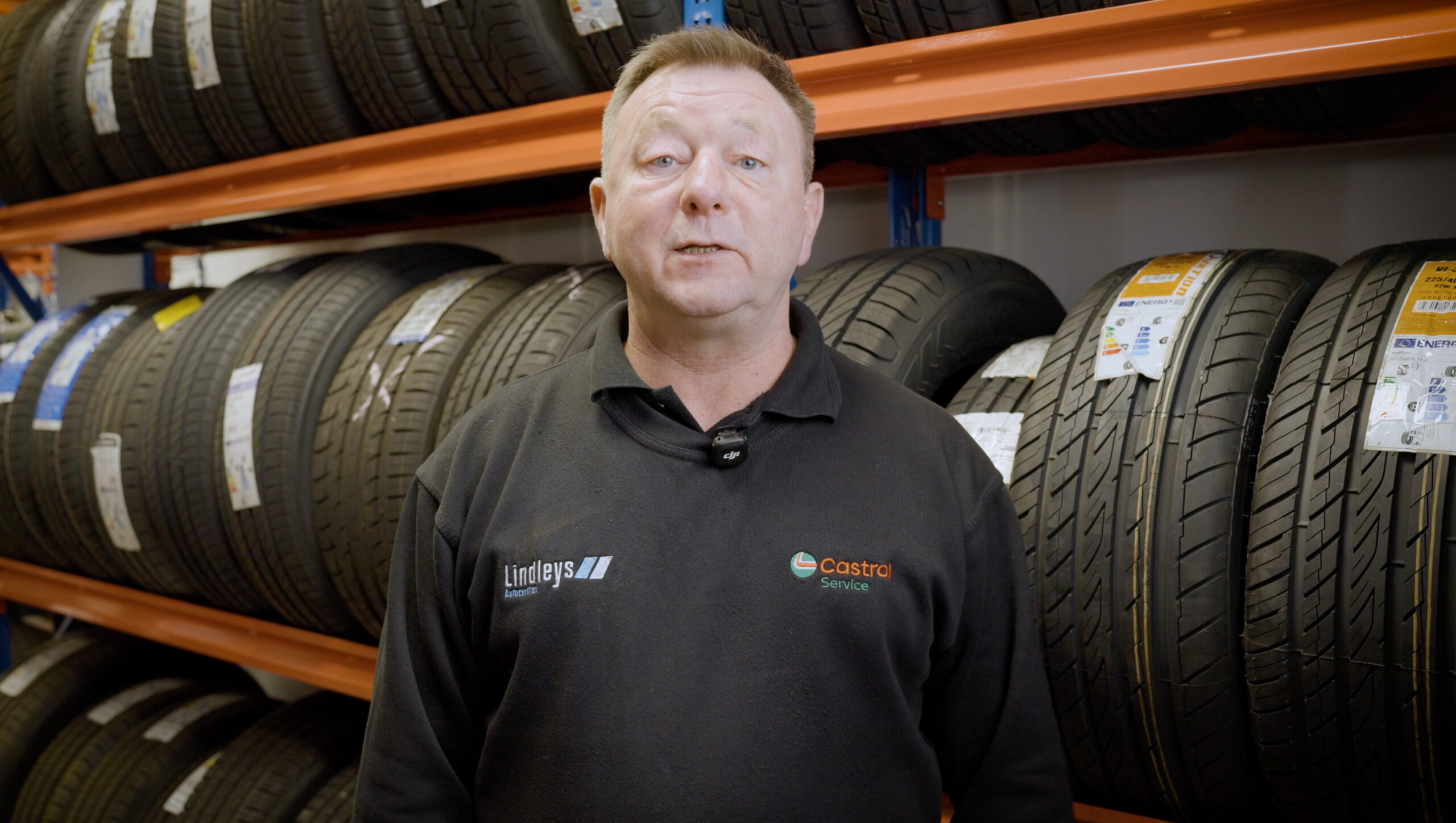

Tyres are the only point of contact between a vehicle and the road, but millions of part-worn tyres enter the market every year with an unknown history. They may appear great value on the surface, but they can unfortunately compromise braking performance, increase the risk of blowouts, and put road users at risk of serious harm.
Stuart Lovatt
Chair at TyreSafePart-worn tyres can conceal a hidden history
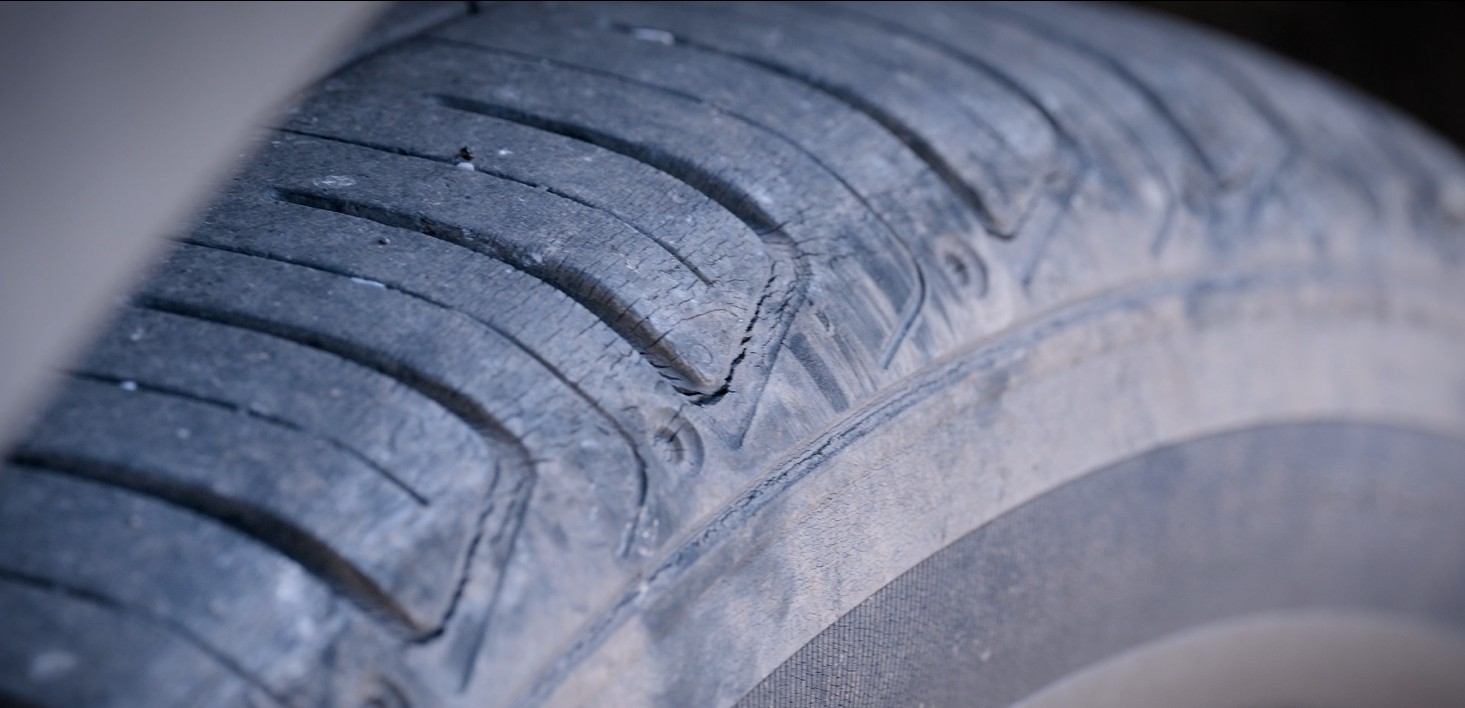
Although they may look fine on the surface, it is very difficult to know how and where they have been used, and if they have been repaired from the inside, which may not be as visible on the exterior surface of a tyre compared to a crack or a bulge, for example.
What do the letters and numbers on a tyre sidewall mean?
“51% of UK adults are not aware of what the letters and numbers on a tyre sidewall mean”*
In our survey about how the cost of living is impacting people’s buying habits, over 51% of people did not know what the letters or numbers on a tyre sidewall meant.
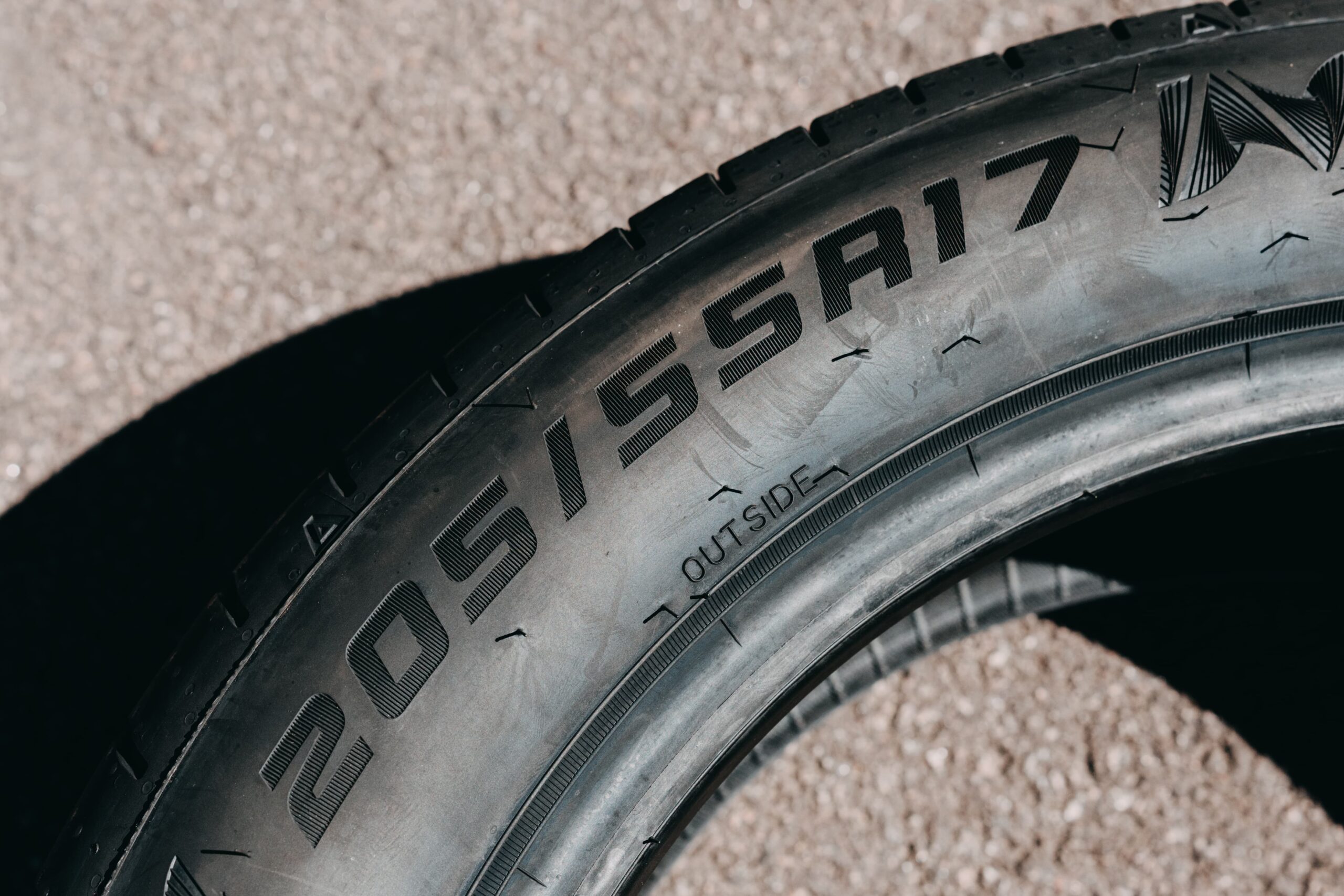
Sidewall markings, made up of letters, numbers and symbols in a universally-recognised order, provide a whole host of useful information about a tyre. In fact, some of the numbers seen relate to size to allow you to get the right fit for your make and model of car.
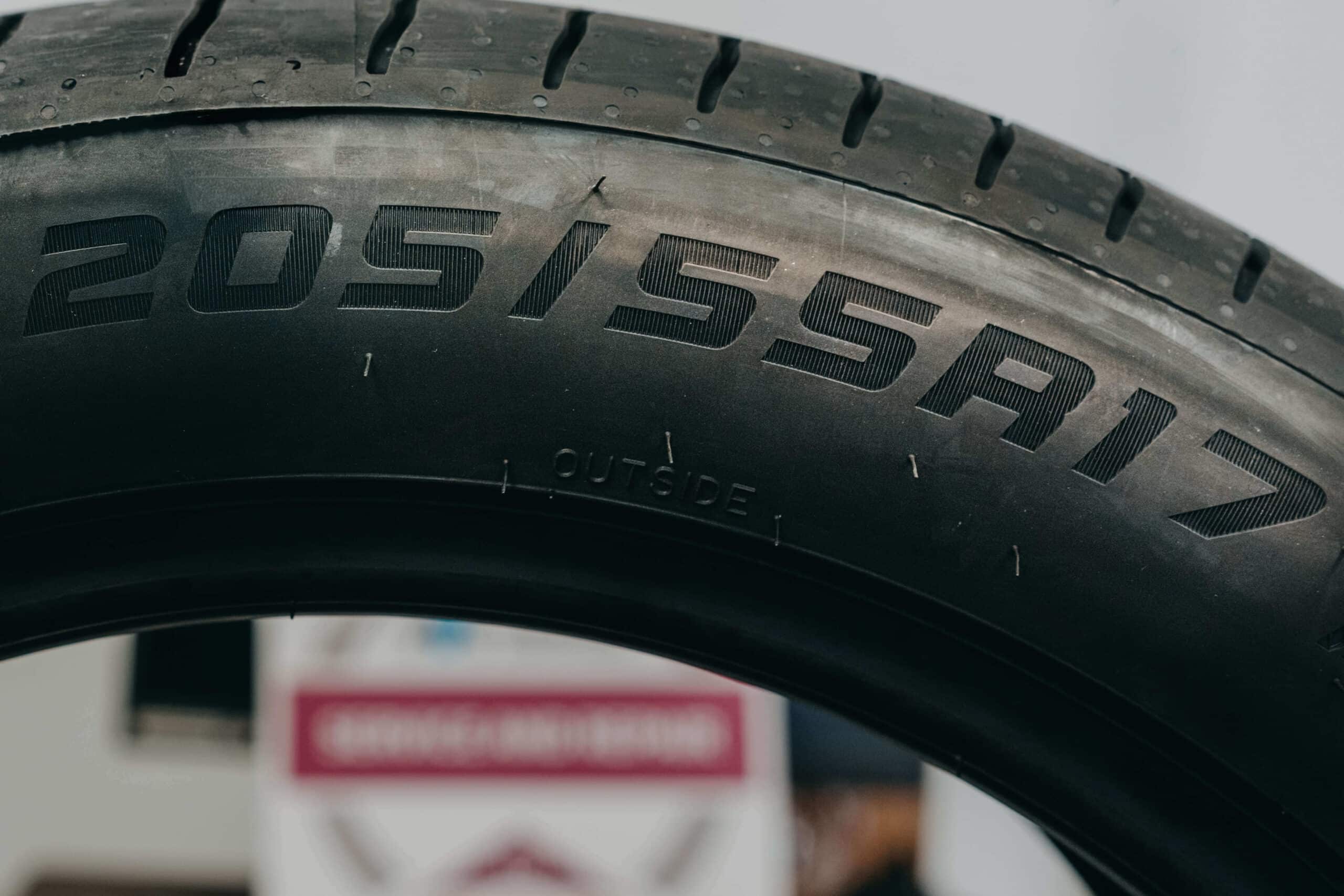
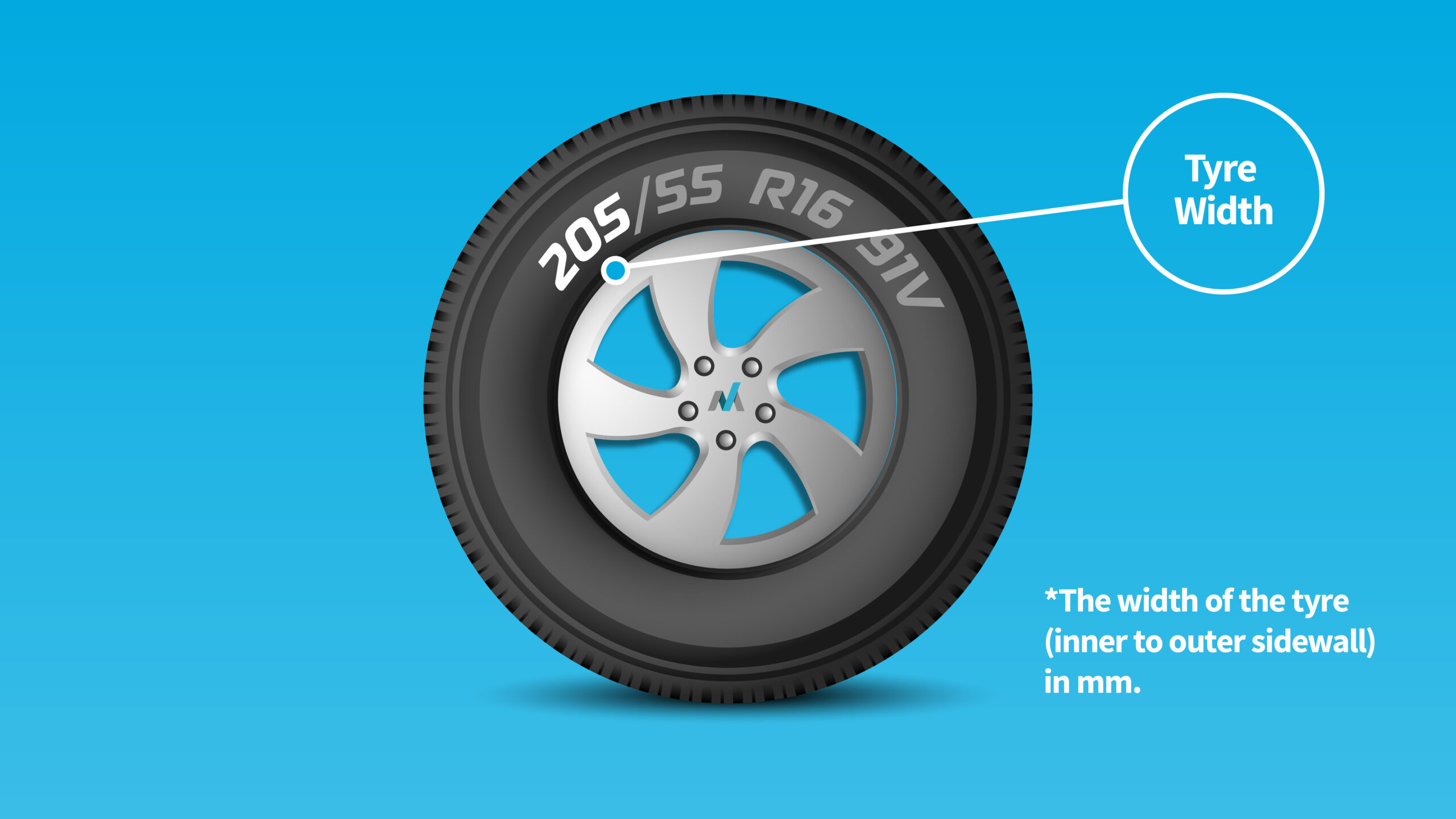
The first three digits on the sidewall
For example, 205, are the width of the tyre in millimetres (i.e. the distance between the inner and outer sidewalls).
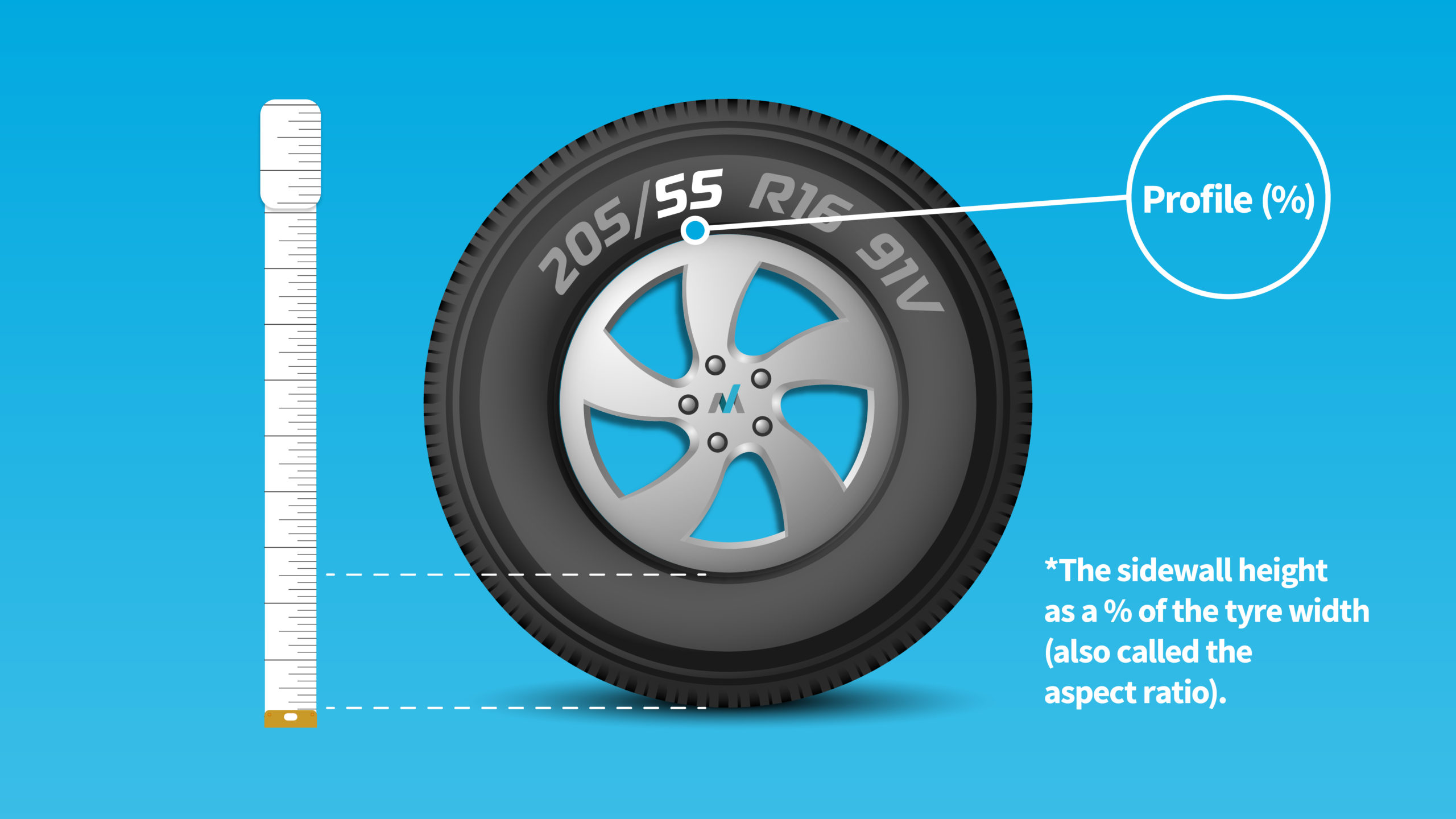
The second number
The second number (e.g 55) is what’s called the profile or aspect ratio. The figure is the height of the sidewall as a percentage (%) of the tyre width.
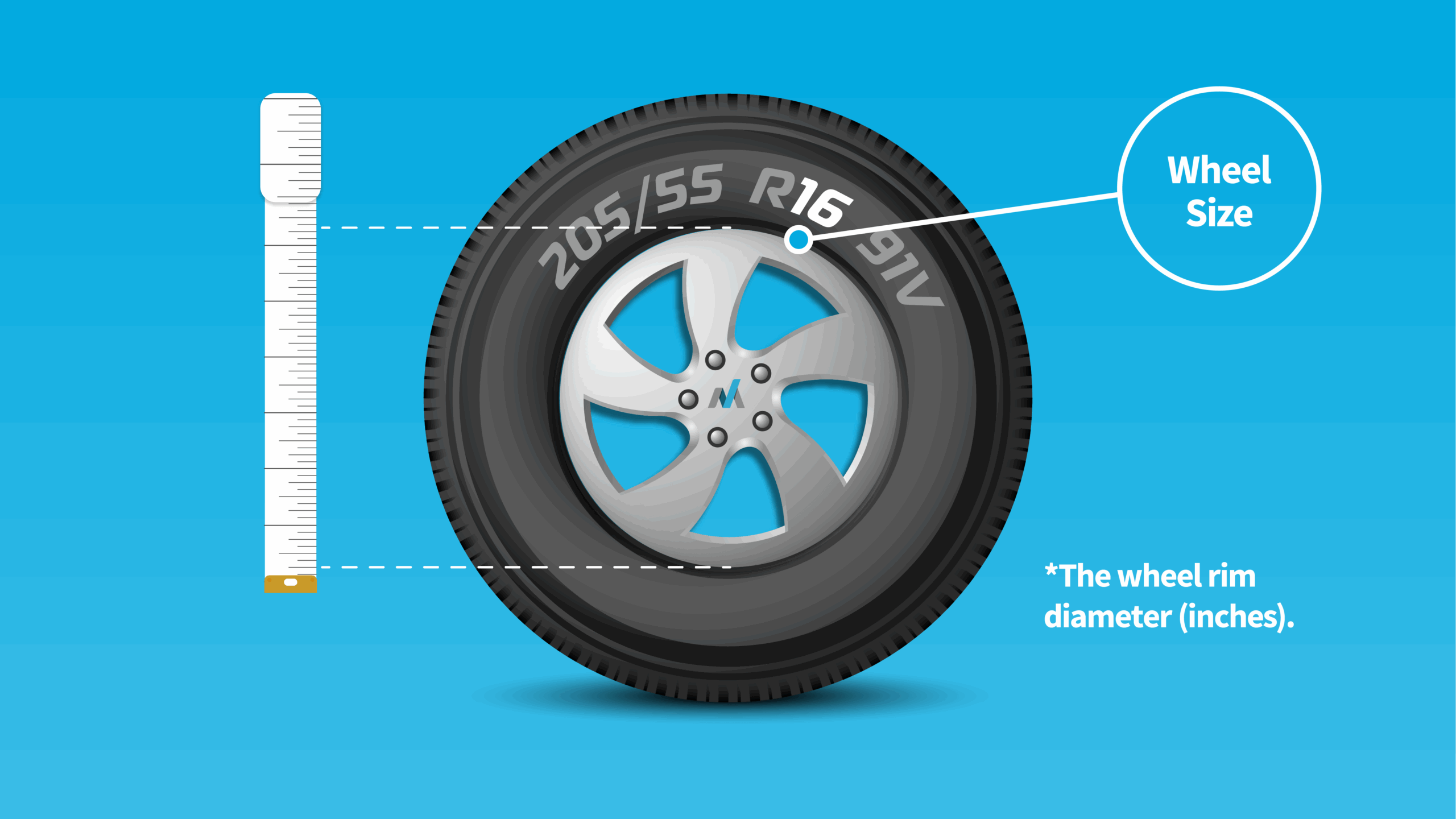
The letter R
In this case, the letter R relates to the internal construction of the tyre. R means “radial”, and almost all new car tyres are made in this way. The next two numbers (16 in this example) is the wheel rim diameter in inches.
The final two digits
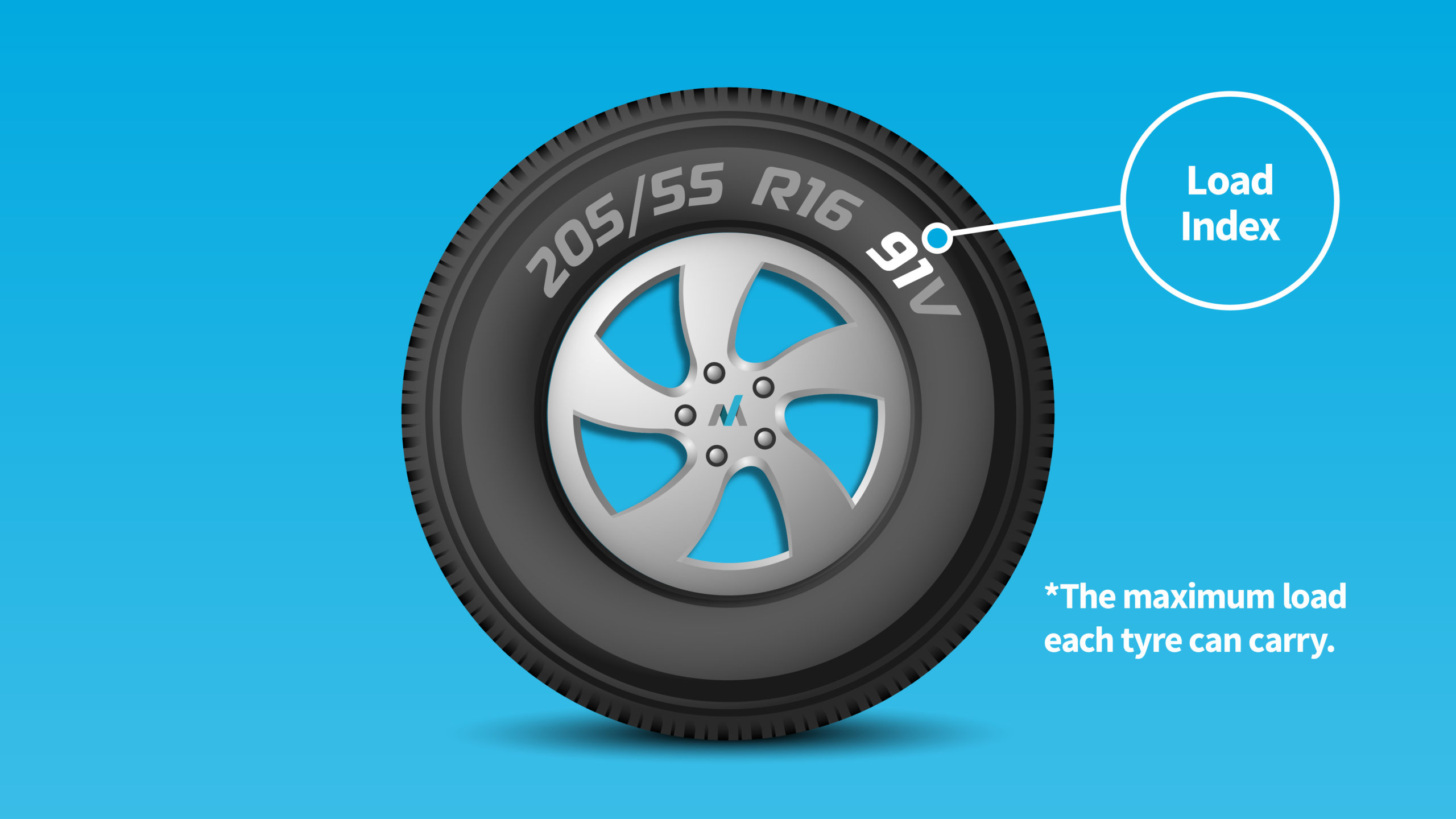
The final two digits relate to the load index, which is a listing of the maximum weight in kilogrammes (kg) each wheel can bear at the speed indicated by the tyre’s speed rating, when it is inflated to its maximum safe pressure. For example, a tyre with a load index of 91 can carry 615kg of weight.
The last letter
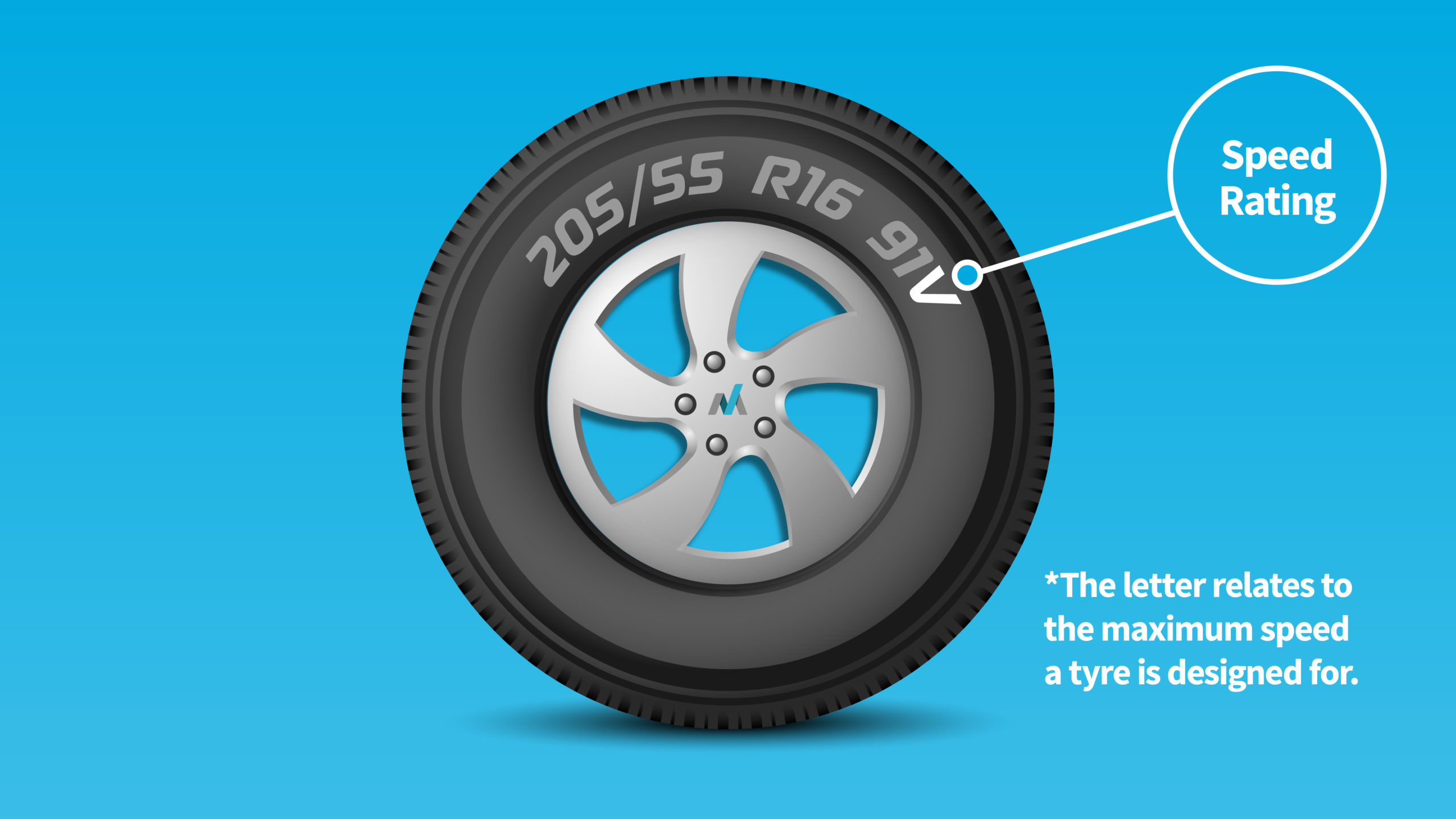
The last letter is the speed rating (e.g. V), which lets you know the maximum speed a tyre is designed for when under load.
What is the DOT code on a tyre?
“69% of UK adults are not aware of what the DOT code on a tyre means”*
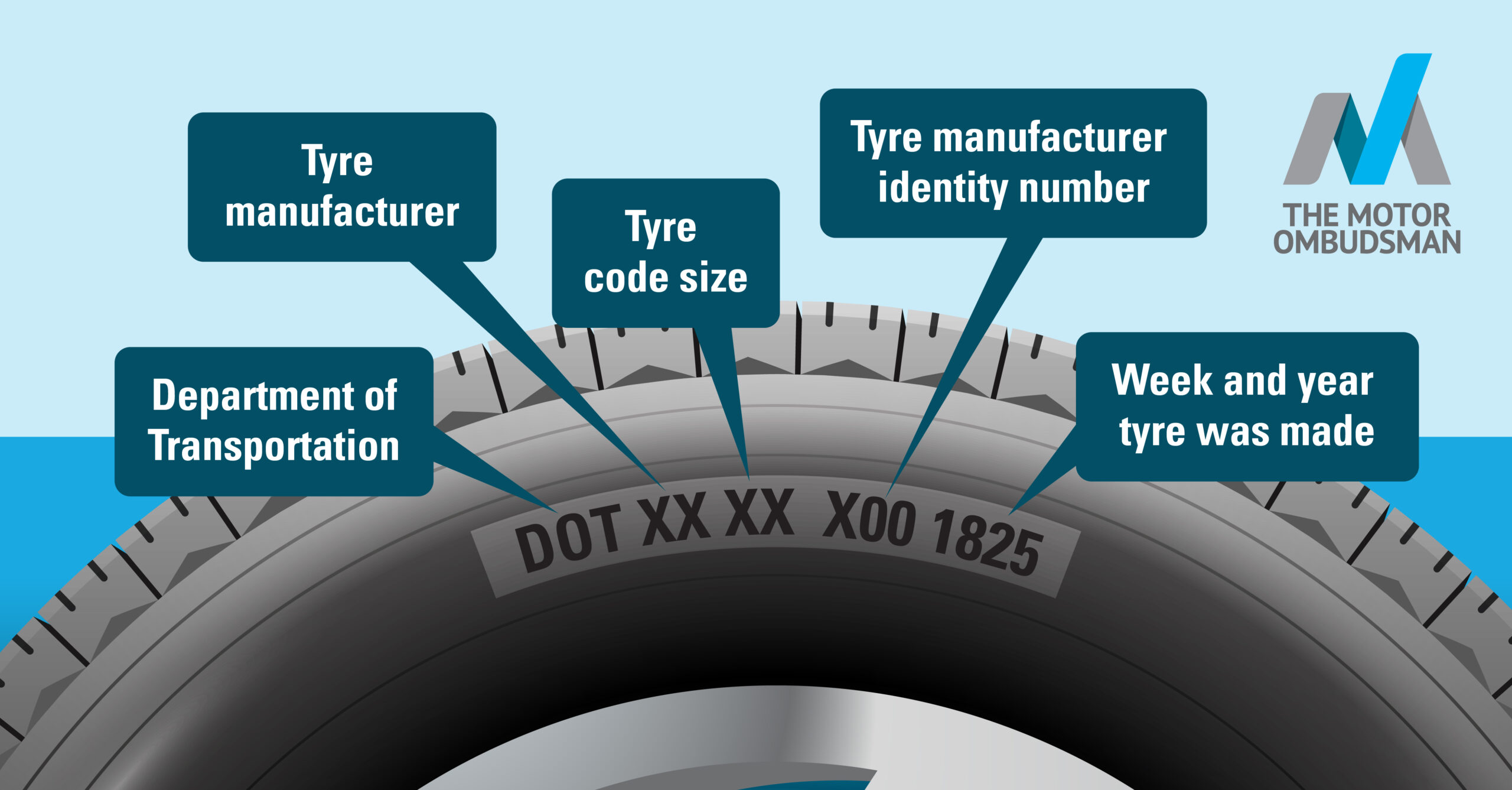
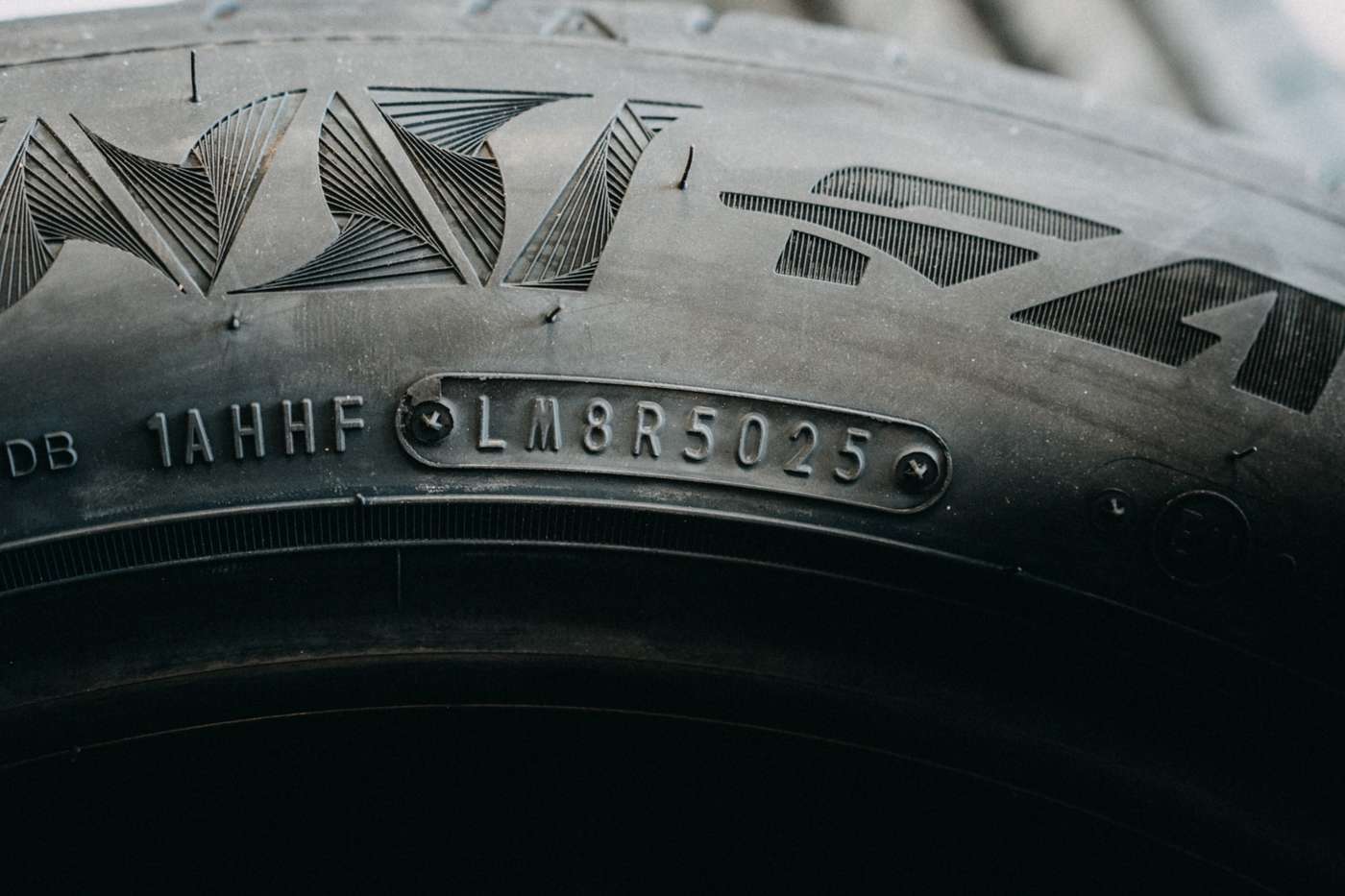
The DOT code for tyres can be found on the sidewall of a tyre, and essentially allows the origin and age of the tyre to be traced – i.e. it’s the equivalent of a tyre’s ‘date of birth’. DOT actually stands for “Department for Transportation”, and is made up of a series of letters and numbers.
The first two letters show the plant code i.e. where the tyre was made, which is followed by another two letters which is the code for the size of the tyre. The next part of the code shows the manufacturer of the tyre, although the brand name is also written in full on the sidewall.
One of the most useful parts of the DOT Code for motorists, which is particularly relevant when identifying the age of a part-worn (second-hand) tyre, is the last four numbers, which shows the week and year that the tyre was manufactured.
For example, in the graphic, the code reads “1825”. This means that the tyre was made in the 18th week of 2025 i.e. April 2025.
In fact, a tyre could still have plenty of tread on it and appear in good condition at a glance, but at the same time, it could be very old, so looks can be deceiving!
Tyre wear patterns and warning signs
The way a tyre wears can indicate whether there may be an issue with pressure, alignment or another part of the vehicle. Wear is not always even, so it is worth checking the full width of the tread rather than looking only at the most visible section.
If both outer edges are wearing more quickly than the centre, the tyre may have been underinflated. If the centre of the tread is wearing more heavily, overinflation may be a factor. Wear on one side of the tyre can sometimes point to wheel alignment issues, particularly if the vehicle also pulls slightly to one side.
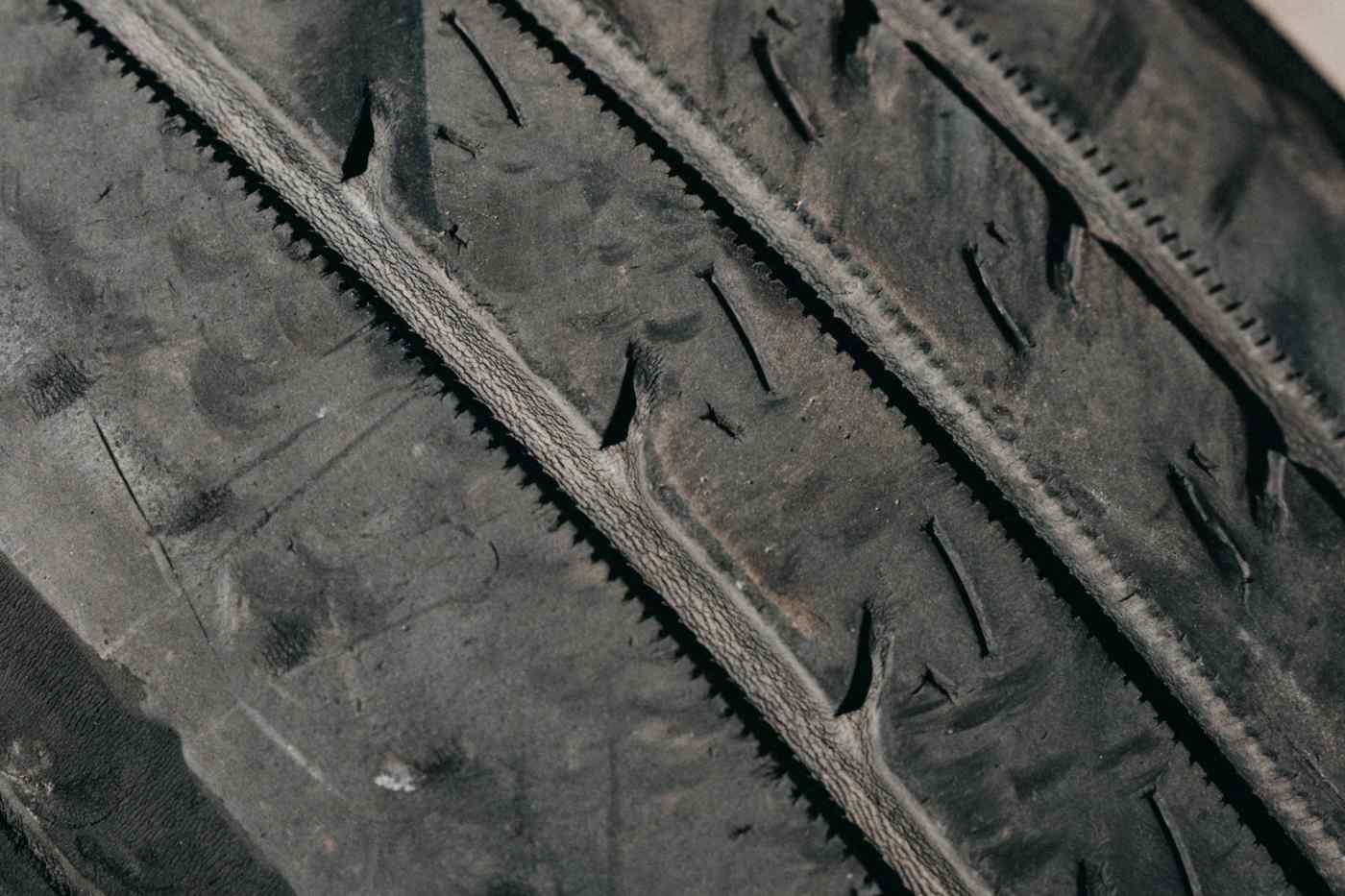
Visible damage should also be taken seriously. Bulges, deep cuts, exposed cords or significant cracking can affect the tyre’s condition and may mean it is no longer suitable for continued use. Objects embedded in the tread, such as a nail or screw, should also be checked, especially if the tyre is losing pressure.
A tyre does not need to be completely flat for there to be a problem. Slow punctures can develop over several days or weeks, and may only become clear through repeated pressure loss or a tyre pressure warning light. Regular checks can help identify these issues before the tyre deteriorates further.
How often tyres should be checked
Tyres should be checked regularly, rather than only before an MOT or when a problem is already noticeable. For many drivers, checking tyre pressure, tread depth and visible condition around once a month is a practical routine. It is also worth carrying out a check before longer journeys, especially if the vehicle will be carrying passengers, luggage or heavier loads than usual.
Additional checks may be needed after hitting a pothole, kerb or road debris. Impact damage is not always obvious straight away, but it can affect the tyre, wheel or alignment.
The MOT provides an annual assessment of whether a vehicle meets required standards at the time of the test. It does not replace routine checks between tests, as tyres can become damaged, lose pressure or wear unevenly at any point during the year.
Over time, regular checks also make it easier to notice changes. If a tyre begins to look softer than the others, wears unevenly or shows visible damage, it is more likely to be picked up before it becomes a larger issue.
When tyres need repairing or replacing
Whether a tyre can be repaired will depend on where the damage is, how severe it is and whether the rest of the tyre is still in suitable condition. A small puncture in the central tread area may be repairable, but this should be assessed by a professional. Damage to the sidewall is usually treated differently, as this part of the tyre plays an important role in its structure.
In other cases, replacement may be the safer or necessary option. This can apply where the tread is at or below the legal minimum, where cords are exposed, where there is a bulge, or where cracking and deterioration are significant. Uneven wear can also affect whether a tyre remains suitable for use, particularly if one section has worn much faster than the rest.
Tyre age can be relevant too. Rubber can deteriorate over time, even where there appears to be tread remaining. Cracking, hardening or visible perishing may mean the tyre needs a closer inspection.
It is also important to make sure you are using the right tyres for the time of year. If you are unsure about seasonal tyre use, read our guide on using winter tyres in summer and visit our winter tyres FAQ page for more information.
If you are unsure whether a tyre can be repaired or should be replaced, our Business Finder can help you locate a garage signed up to The Motor Ombudsman’s Codes of Practice.

How to change a tyre safely
Changing a tyre should only be attempted where the vehicle is stopped in a safe location and the correct equipment is available. If the vehicle is on a motorway, narrow verge or any place exposed to moving traffic, roadside assistance is usually the safer option.
Where it is safe to continue, the vehicle should be parked on firm, level ground, with the hazard lights on and the handbrake applied. The vehicle handbook should be checked before starting, as it will show the correct jacking points and any instructions specific to the model.
Some vehicles carry a full-size spare wheel, while others have a space-saver spare or a tyre repair kit. A space-saver wheel is intended as a temporary measure and will usually have speed and distance restrictions.
When to ask a garage to check your tyres
A visual check at home can be useful, but it will not always show the full condition of a tyre. Some issues need a closer inspection, particularly where pressure loss, uneven wear or visible damage keeps returning.
A garage can check tread depth, pressure, puncture location, wheel alignment and the general condition of the tyre. This may be useful if a tyre keeps losing pressure, if wear looks uneven, or if the vehicle feels different when driven.
It may also be worth arranging a check before a long journey, after an impact with a pothole or kerb, or when the vehicle has been standing unused for a while.
Final thoughts on tyre maintenance
Tyre maintenance does not need to be difficult, but it does need to happen before problems become obvious. Pressure, tread depth and visible condition can all change between services and MOTs.
By checking tyres regularly, drivers can make more informed decisions about when a tyre needs attention. Where something looks wrong, feels different or is difficult to judge, a professional inspection can help confirm whether the tyre is suitable for continued use, repair or replacement.
For consumers looking for a garage, The Motor Ombudsman’s Business Finder offers a convenient way to search for accredited businesses that are committed to our Codes of Practice.
*Source: Survey of 2,000 UK adults commissioned by The Motor Ombudsman (April 2026)